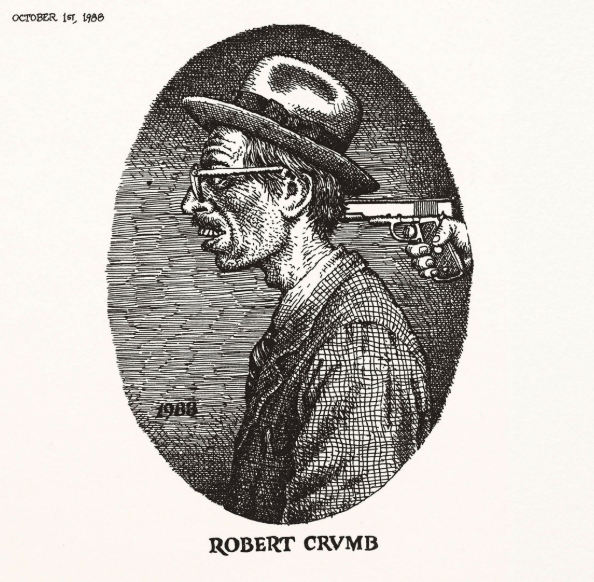
R. Crumb, Detail of Self Portrait (Gun), 2025 © Robert Crumb, 2025. Courtesy the artist, Paul Morris, and David Zwirner
David Zwirner's London outpost is about to get weird. The gallery opens a major exhibition of Robert Crumb's work shortly, bringing the underground comix godfather's unfiltered visual id to a setting more accustomed to blue-chip contemporary fare than hypersexualized, angst-ridden, stoned-again stylings.
While much of the art world chases algorithmic relevance and institutional respectability, Crumb's work remains a monument to uncompromising personal vision—raw id channeled through obsessive draftsmanship. The works are authentic artifacts from American counterculture's most unhinged corners, now framed within the commercial art establishment that would have dismissed them as pornographic doodles 50 years ago.
The works slated for walls of Zwirner’s London gallery show Crumb's range beyond the gonzo satire he's famous for. His technical facility is immediately apparent—dense crosshatching, meticulous line control, compositions that owe as much to vintage illustration and old master prints as they do to LSD. This is the paradox that makes Crumb endure: immaculate technique deployed in service of subject matter that is anything but refined.
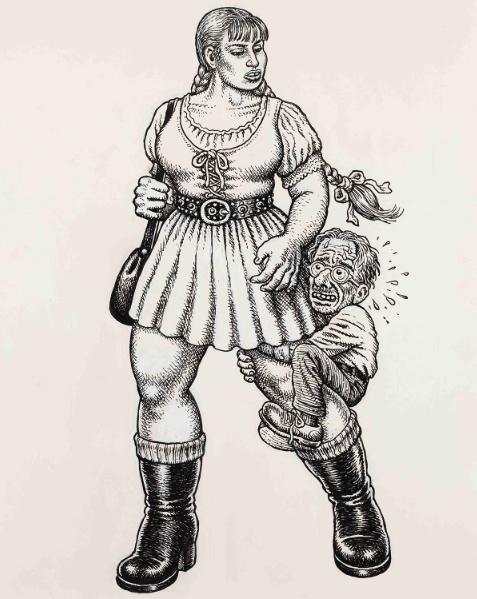
Crumb’s work demonstrates his gift for social caricature rendered with the precision of a Dürer woodcut. Some pieces show his obsession with vintage Americana—those Depression-era typography flourishes, the period-perfect rendering that locates his work somewhere between documentary and dope sick delerium. Others reveal the psychological autobiography that always lurked beneath the surface grotesquerie: Crumb as unflinching chronicler of his own neuroses, rendered without the safety net of ironic distance.
What distinguishes Crumb from the countless artists who've mined transgression for shock value is his absolute commitment to craft. These aren't provocations for provocation's sake. They're documents of a particular American consciousness—sexually frustrated, culturally overstimulated, politically disgusted—expressed through a visual language that draws equally from Bruegel's peasant scenes and Tijuana bibles.
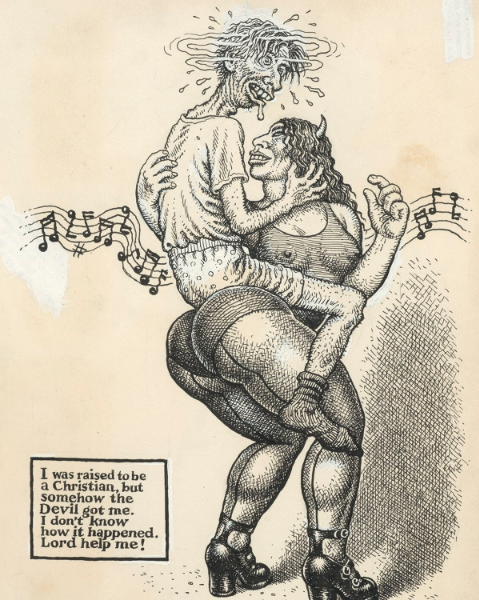
His journey from underground comix legend to blue-chip gallery artist mirrors the broader absorption of counterculture into institutional spaces. Zwirner showing Crumb isn't cultural dilution—it's recognition that the margins often produce the most honest documents of their moment. While his contemporaries in the fine art world were pursuing minimalist purity or conceptual gestures, Crumb was drawing exactly what he saw in his head, consequences be damned.
Whether Mayfair is ready for Crumb's particular brand of visual assault remains to be seen. But that's never been his concern.
R. Crumb There’s No End to the Nonsense runs from January 29 to March 14 at David Zwirner, 24 Grafton Street, London