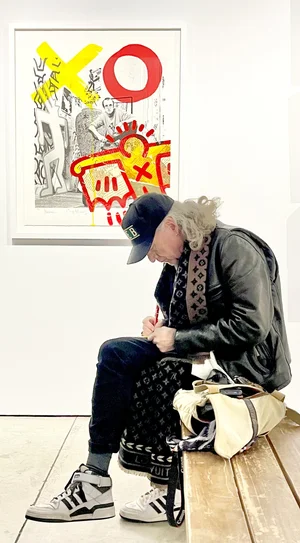
The Outsider Art Fair opens March 19 at the Metropolitan Pavilion, 125 W. 18th St. in Chelsea. Photo by Bre Johnson courtesy Outsider Art Fair
For most of the year, the art world runs on three things: credentials, contacts, and cash. MFA degrees, gallery rosters, glossy catalogs, lines of credit are the coin of the realm. Artists, curators, collectors, critics are the players. Together they comprise a polite ecosystem that decides who counts as an artist and who doesn’t.
But every so often, a different kind of artist crashes the party.
The obsessives. The loners. The self-taught visionaries who spent decades building entire universes in notebooks and on reused canvases stacked lovingly for no one in basements, attics and rented spaces—without a single art school diploma, gallery opening or public critique to their names.
They’re the outsiders.
And this spring in New York, they’re suddenly everywhere.
The moment is unusually concentrated. The Outsider Art Fair returns to the Metropolitan Pavilion March 19–22, the American Folk Art Museum opens Self-Made: A Century of Inventing Artists on April 10, and Off-Broadway audiences are stepping into the strange psychological world of outsider legend Henry Darger in the new drama Bughouse. Taken together, the three events suggest something unusual: artists who once existed entirely outside the art world are now featuring at its cultural center of gravity.
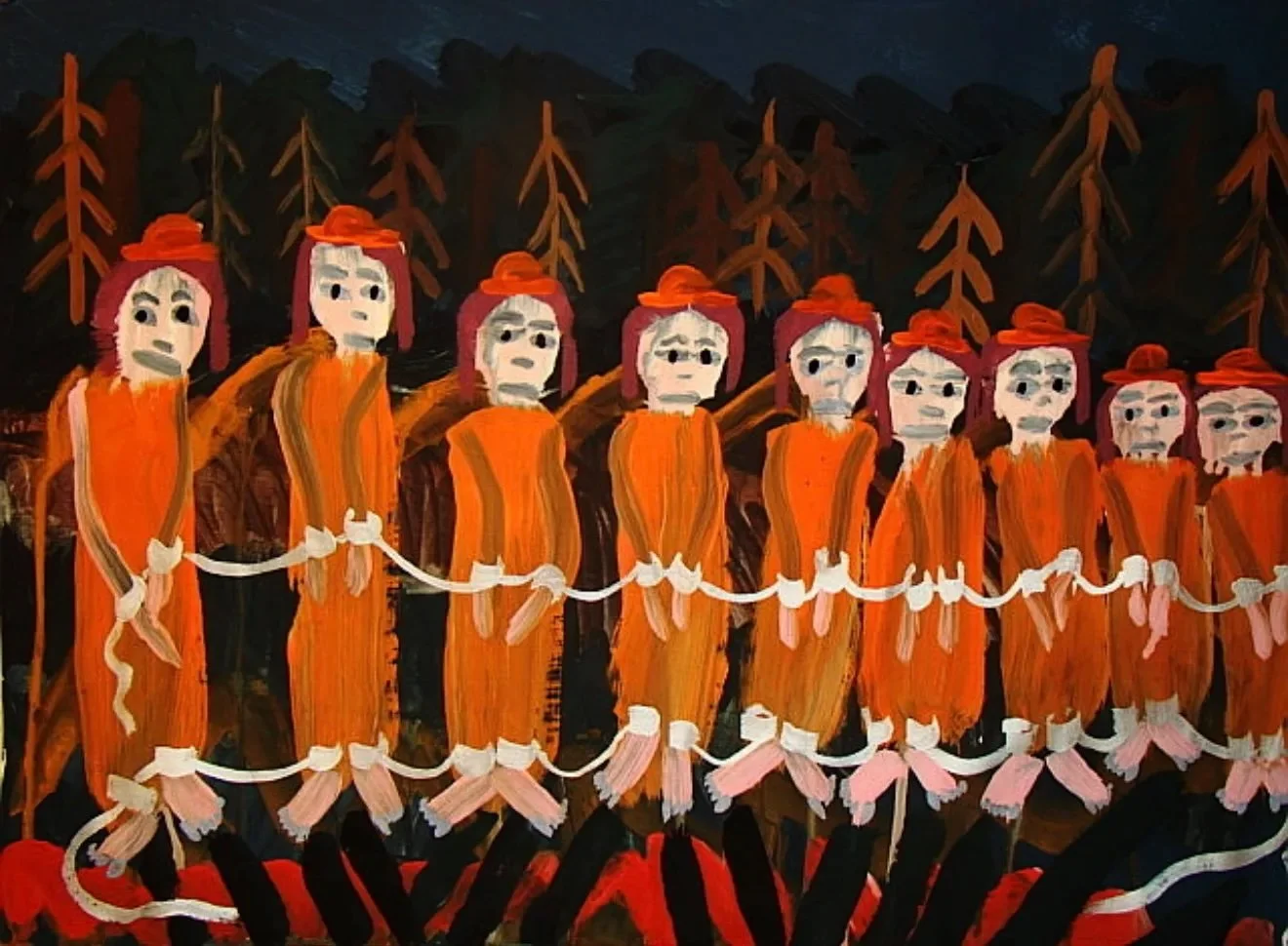
Alma Realm, Woodland Chain Gang, 2026, at the Outsider Art Fair, Deer Gallery. Photo courtesy Deer Gallery
The Outsider Art Fair has been the annual gathering point for this alternate art universe since 1993. Still the only fair devoted entirely to self-taught, art brut, and outsider artists, it draws galleries and collectors from around the world who specialize in work that often developed far from the traditional gallery system.
Walking through the fair rarely feels like walking through an art fair. It feels more like stumbling into dozens of private worlds.
Walls fill with dense visionary drawings that look like coded maps of imaginary cities. Scrapbooks expand into sprawling mythologies. Ballpoint pen cosmologies spiral across yellowing paper. Some of the artists represented create in near total isolation, driven by impulses that had little to do with markets or institutions.
Which raises a question the art world has never fully answered: what exactly makes someone an artist?
That question sits at the center of the American Folk Art Museum’s upcoming exhibition Self-Made: A Century of Inventing Artists. Opening April 10, the show examines how artists without formal academic training have defined themselves over the past 100 years, bringing together more than 90 works including drawings, paintings, sculptures, photographs, and notebooks.
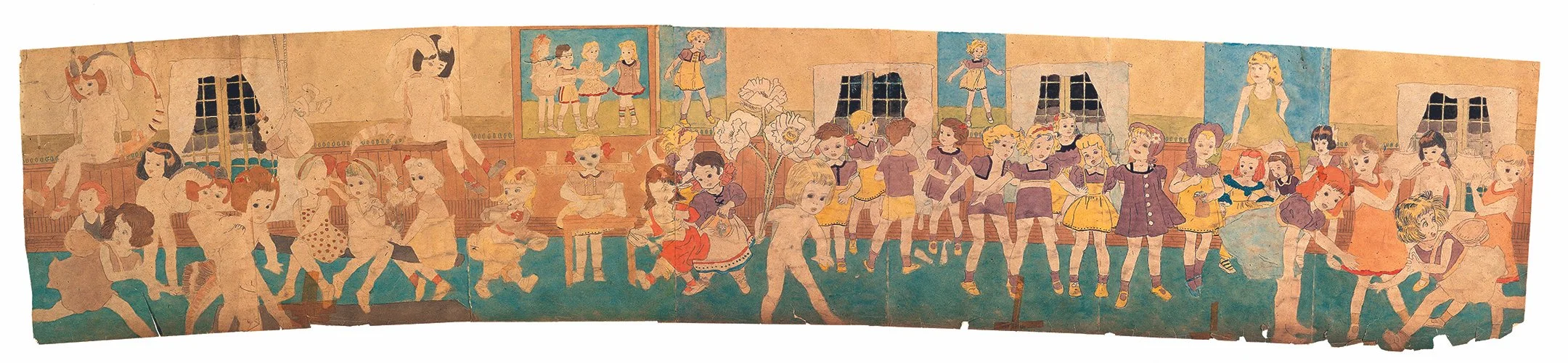
Henry Darger, page from untitled scrapbook, 1960, is part of the American Folk Art Museum’s upcoming show Self-Made: A Century of Inventing Artists. Photo courtesy the American Folk Art Museum
Rather than treating self-taught artists as charming anomalies, the exhibition argues that many were deeply conscious of their own artistic identities. Self-portraits, alter egos, and autobiographical narratives become tools of authorship—ways of asserting creative agency in a system that never formally invited them in.
Self-Made is curated by Valérie Rousseau, the museum’s Curatorial Chair and Senior Curator of 20th-Century & Contemporary Art, and Suzie Oppenheimer, Ponsold-Motherwell Curatorial Fellow, City University of New York. They designed the exhibition to take a critical look at the historical definition of the “self-taught artist” in the United States from the early 20th century to today.
“Self-made artists should be celebrated for the way they define themselves,” Rousseau told Whitehot. “Artists positioned outside the narrow parameters of the art-historical canon because of their race, gender, place of origin, class, mental health, or other deviations from normative power structures have long been burdened with reductive interpretations. Art can be a physical record of an individual’s reality that counteracts distortions created by media, political, and social narratives,” she said.

John Kane, John Kane and His Wife, 1928, oil on canvas, part of the American Folk Art Museum’s upcoming show Self-Made: A Century of Inventing Artists. Photo courtesy the American Folk Art Museum
Founded in 1961, the museum has spent decades expanding the definition of what American art looks like. Its collection now includes more than 7,500 works spanning four centuries, produced by artists whose skills were developed largely outside traditional academic training.
Included in the museum’s exhibition is painting and writing from a figure who has become something like the genre’s patron saint: Henry Darger.
During his lifetime, Darger was almost invisible. A quiet janitor in Chicago, he lived alone in a cramped rented room and attended church daily. When he died in 1973, his landlords entered the apartment and discovered something extraordinary—an enormous secret archive.
There were stacks of watercolor illustrations, hundreds of them, depicting surreal battle scenes populated by angelic child warriors and grotesque armies. There were thousands of pages of writing. The manuscript alone—The Story of the Vivian Girls in What Is Known as the Realms of the Unreal—ran more than 15,000 typed pages.
Darger had spent decades constructing an entire fictional universe and no one knew it existed. Today, his work hangs in major museum collections and sells for six figures. His strange interior life has become one of outsider art’s foundational myths.
Now it’s also theater.
The Off-Broadway play Bughouse dives into the psychology of the secretive artist and the elaborate inner world he constructed in isolation. Like much of outsider art itself, the story blurs the line between visionary creativity and obsessive compulsion.
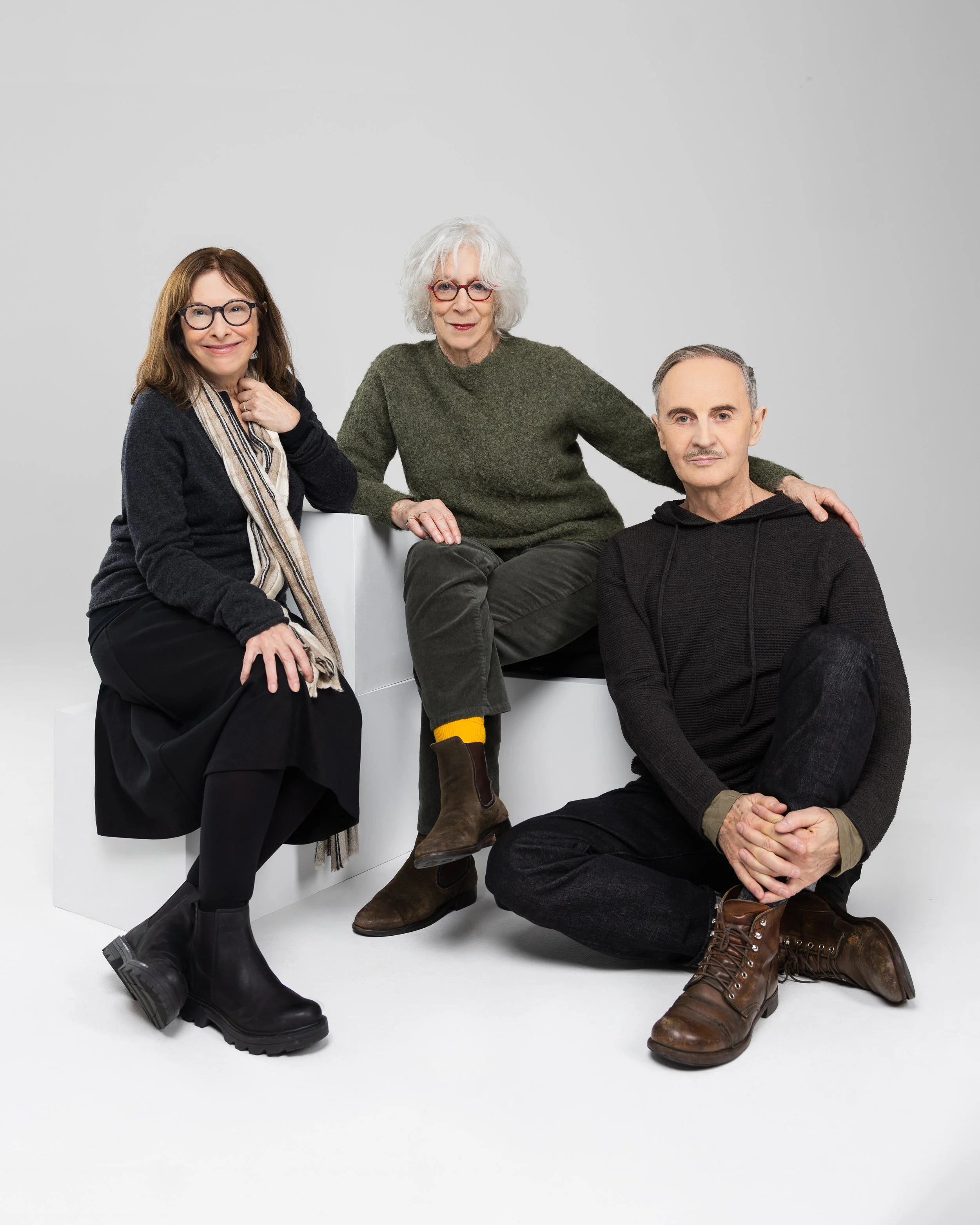
Bughouse, the off-Broadway play about outsider legend Henry Darger, is directed by Martha Clarke, left, with a script by Pulitzer Prize-winning playwright Beth Henley, center, and stars John Kelly as Darger. Photo by Mettie Ostrowski
The irony, of course, is that outsider art rarely stays outside forever.
New York galleries have increasingly become translators between these once-isolated artists and the global art market. Among the most visible champions of the field is Adriaan Van Der Plas, whose Lower East Side gallery has been introducing outsider artists to collectors for years.
“Oh, it’s growing, big time,” Van Der Plas said during an interview with Whitehot as he prepared work to be exhibited in his booth at the Outsider Art Fair. “Everybody wants to be an outsider. We don't want to be inside this anymore, okay. I think it also has something to do with the world, the way it's moving towards those who have everything and those who have very little. We don't want to run with all the war mongers and all the crazies. We want to have purpose in life,” he said.
Van Der Plas is bringing a stable of established outsider artists to the fair, including Anne Marie Grgich, Justin Duerr, Jason McLean, Christine Randolph, Konstantin Bokov and Susan Day. The work of these artists is diverse to say the least, from Grgich’s intricate collages, to Duerr’s textured pen and ink monumentals, to McLean’s frenetic mindscapes. What these artists have in common, though, is a fierce, uncompromising need to operate on their own terms, far outside mainstream art networks.
One piece by Grgich checks all the outsider boxes. The large mixed-media work—heavily textured, built up with layered materials into a rough, almost archaeological surface—depicts a monumental face that seems at once ancient and invented. Like most outsider artists, Grgich delivers her messages with a strong biographical dimension: a severe car accident in 1981 resulted in a traumatic brain injury, and during her recovery Grgich found both solace and expression through drawing and writing. She turned to art not so much as a career choice, but as a survival mechanism—a pure outsider origin story if there ever was one.

Adriaan Van Der Plas holds a work by Anne Marie Grgich. Photo by J. Scott Orr
“I look at this painting by Anne Marie and I go, oh my god, this is amazing. And I'm not the only one. All over people are falling in love with this art and, I hope, not just falling in love with the money of it. I feel something when I look at this painting. You know, it moves me,” Van Der Plas said.
The rise of outsider art has quietly complicated one of the art world’s oldest assumptions: that legitimacy flows from institutions.
For most of the 20th century, the hierarchy was clear. Artists trained at schools, built careers through galleries, and were validated by critics and museums. Outsider artists existed somewhere else entirely — in psychiatric hospitals, prisons, rural backyards, cramped apartments, or community workshops.
Now those worlds overlap, as outsider artists have found their way into museums, galleries, art fairs and the pages of art media outlets.
But the best outsider art still carries something the mainstream art world struggles to manufacture: the feeling of absolute necessity. Much of it was never meant to be seen. It was made because the artist simply couldn’t stop making it.
And that may be why outsider art continues to exert such a strange gravitational pull on the contemporary art world.
In a cultural moment increasingly shaped by branding, strategy, and career choreography, outsider artists remind us of the power and enduring potential of alternative universes.