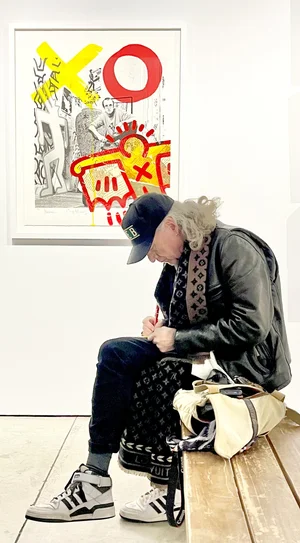
Holiday Shopping at Sotheby's: All I Want for Christmas Is a Shot Marilyn
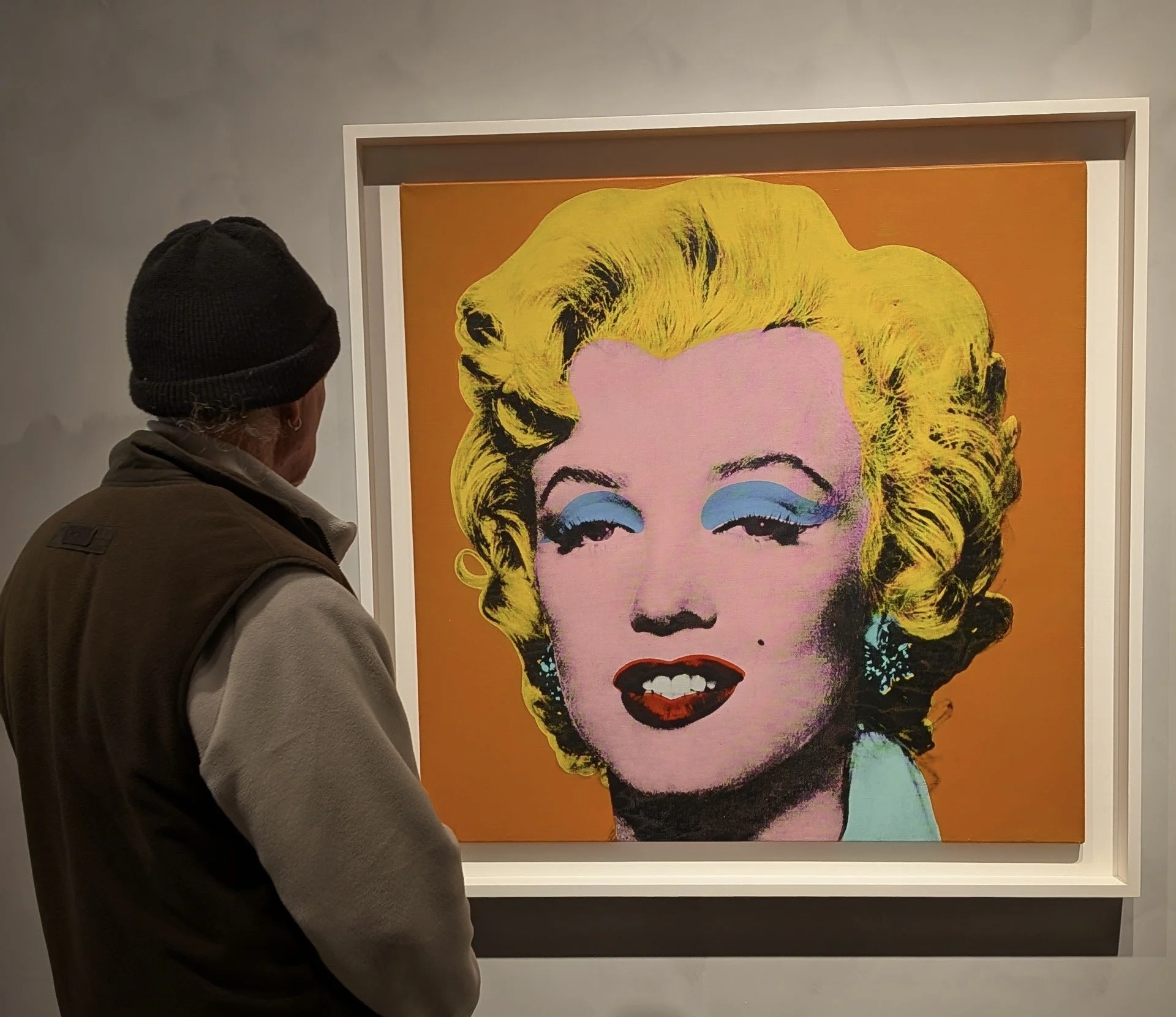
Warhol's Shot Orange Marilyn (1964), which reportedly was sold for $200 million in a private transaction. Photo by Lisa Freeman
It’s that wonderful time of the year in New York: the tree is up at Rockefeller Center, the smell of roasted chestnuts wafts down the avenues, the windows at Bergdorf are alight with joyous scenes of gaudy consumption.
The perfect time for a little Christmas shopping on Madison Avenue, where art auction titan Sotheby’s is celebrating the opening of its new global headquarters in the venerable Breuer Building, the brutalist fortress that formerly housed the Whitney, the Met’s contemporary art collection, and the Frick. The perfect place to pick up a bibelot or two for that special someone.
On view: a collection of contemporary art masterpieces so obscenely valuable it makes 5th Avenue’s elite retailers like Cartier and Tiffany look like bodegas. The Sotheby’s exhibition, called Icons: Back to Madison, features 27 works with a combined market value in excess of $2 billion. The catalog reads like a greatest-hits compilation of auction records, anchored by Jean-Michel Basquiat's $110.5 million skull and Andy Warhol's bullet-scarred Shot Orange Marilyn, which reportedly changed hands for $200 million.
The exhibition gives New Yorkers a rare opportunity to commune with masterpieces temporarily liberated from billionaire vaults and museum storage while simultaneously witnessing the staggering sums that have come to define today's art market apex. It also offers a non-subtle reminder that Sotheby's still owns the art market's upper atmosphere.
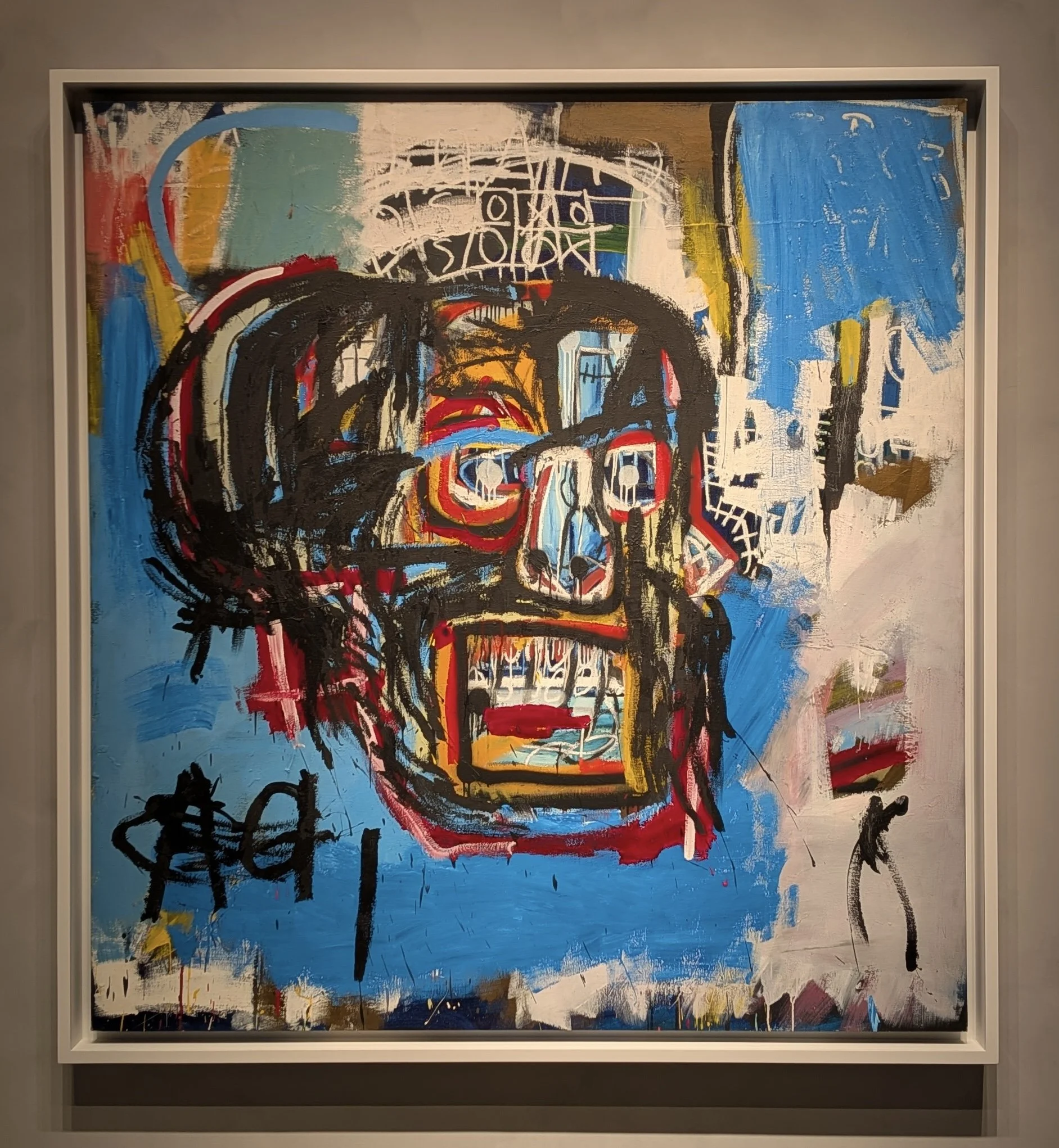
Basquiat's Untitled (1982) skull painting which sold for $110.5 million in 2017, initially to Yusaku Maezawa and later resold for an undisclosed sum. Photo by Lisa Freeman
Take, for example, Untitled 1982, created by 21-year-old Jean-Michel Basquiat while working out of the 2,000-square-foot basement of art dealer Annina Nosei's gallery on Prince Street in SoHo. Barely old enough to drink, Basquiat was already operating with complete mastery, fusing downtown graffiti's guerrilla energy with the emotional punch of Abstract Expressionism to create a unique visual language that shook the foundations of the art world.
The painting sold initially for $4,000 in 1982, then vanished into private hands after fetching $19,000 at Christie's in 1984. It exploded back into public consciousness in 2017 when Japanese collector Yusaku Maezawa paid $110.5 million for it at Sotheby’s—setting an auction record for a work of contemporary art and making Basquiat the youngest artist ever to break nine figures. Somewhere thereafter, the piece was scooped up by billionaire collector Kenneth C. Griffin for an undisclosed sum, adding to his reputation for market-resetting acquisitions.
Basquiat’s masterpiece is hardly alone among the record-setting works on view at Sotheby’s. Also in the lineup is Andy Warhol's Shot Orange Marilyn (1964), another nine-figure piece owned by Griffin, whose appetite for pricey acquisitions has redefined what "expensive" means in contemporary art. Shot Orange Marilyn got its bullet hole along with three other portraits of the '60s sex symbol during an unauthorized Factory firearm performance. The “shot,” which may be faintly visible despite Warhol’s repair job, turned Pop Art's most recognizable face into a legitimate artifact of '60s avant-garde chaos.
Publisher Si Newhouse bought the piece for $17.3 million after spirited bidding at a Sotheby’s auction in 1998. Years later, Griffin bought it in a private sale from the Newhouse estate, reportedly for somewhere between $200 million and $240 million. When Christie's sold the sage blue version for $195 million in 2022, it confirmed what dealers already understood: the four Shot Marilyns represent Warhol at his most potent, distilling celebrity worship and American mythology into 40x40 inches.
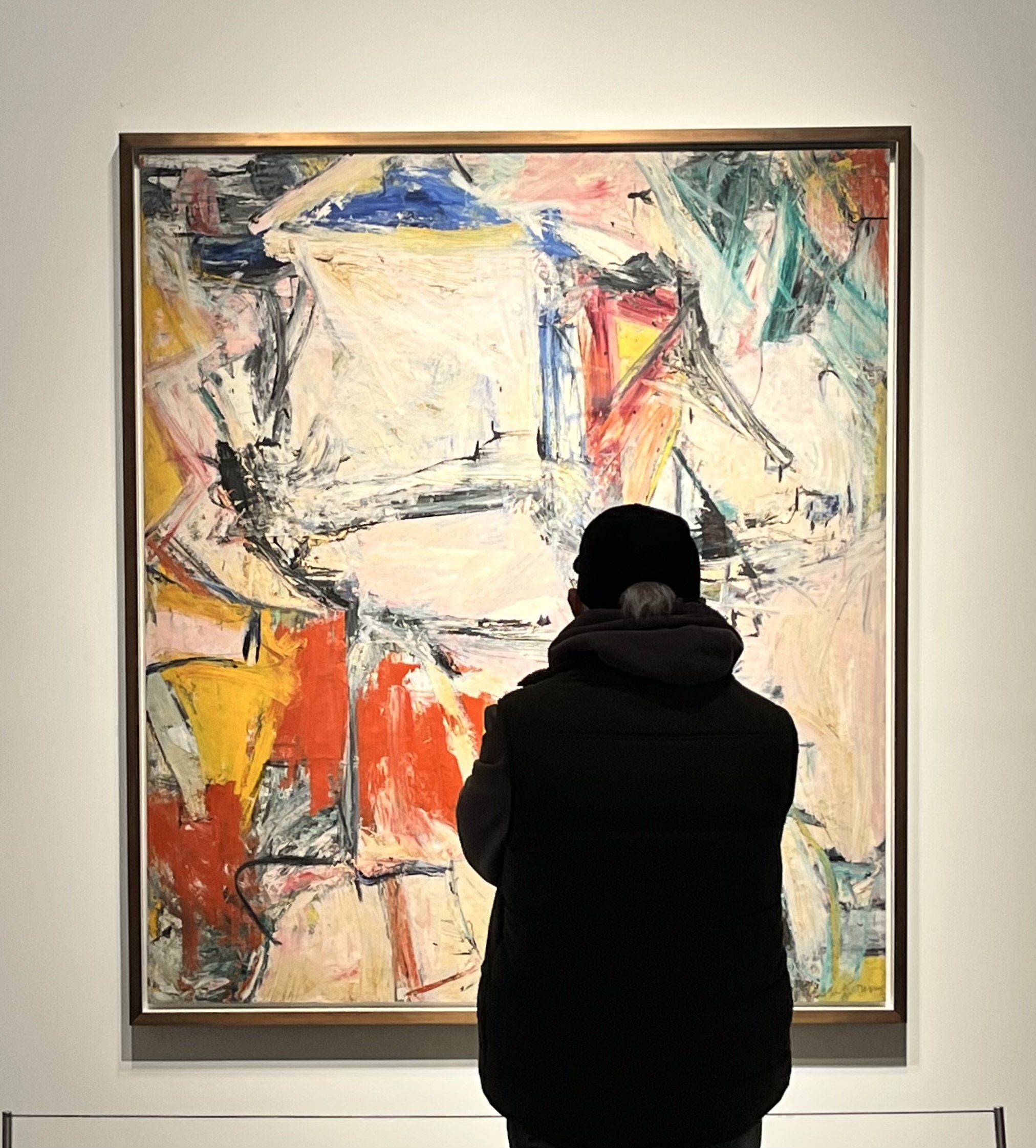
Willem de Kooning's Interchange (1955) reportedly sold privately for $300 million. Photo by Lisa Freeman
Also in the show, Willem de Kooning's Interchange (1955) and Jasper Johns's False Start (1959), which trace their own ridiculous price escalations. The de Kooning—painted right when he was shifting toward more atmospheric abstraction—sold at Sotheby's in 1989 for $20.68 million, a living artist record at the time. Griffin paid David Geffen approximately $300 million for it in 2016, according to The New York Times and Wall Street Journal. Johns's False Start set its own living artist record at $17.05 million in 1988 before Griffin bought it from the Geffen Foundation in 2006 for a reported $80 million.
But the show is more than a display of Griffin’s most expensive purchases. There's also Banksy's Girl Without a Balloon, which infamously partially shredded itself the second Sotheby's gavel dropped at £1.04 million ($1.4 million) in 2018—the only artwork ever created mid-auction. Francis Bacon's Three Studies for Portrait of Lucian Freud (1965) freezes two brilliant rivals mid-friendship, while David Hockney's The Splash (1966) delivers that perfect Los Angeles poolside geometry.
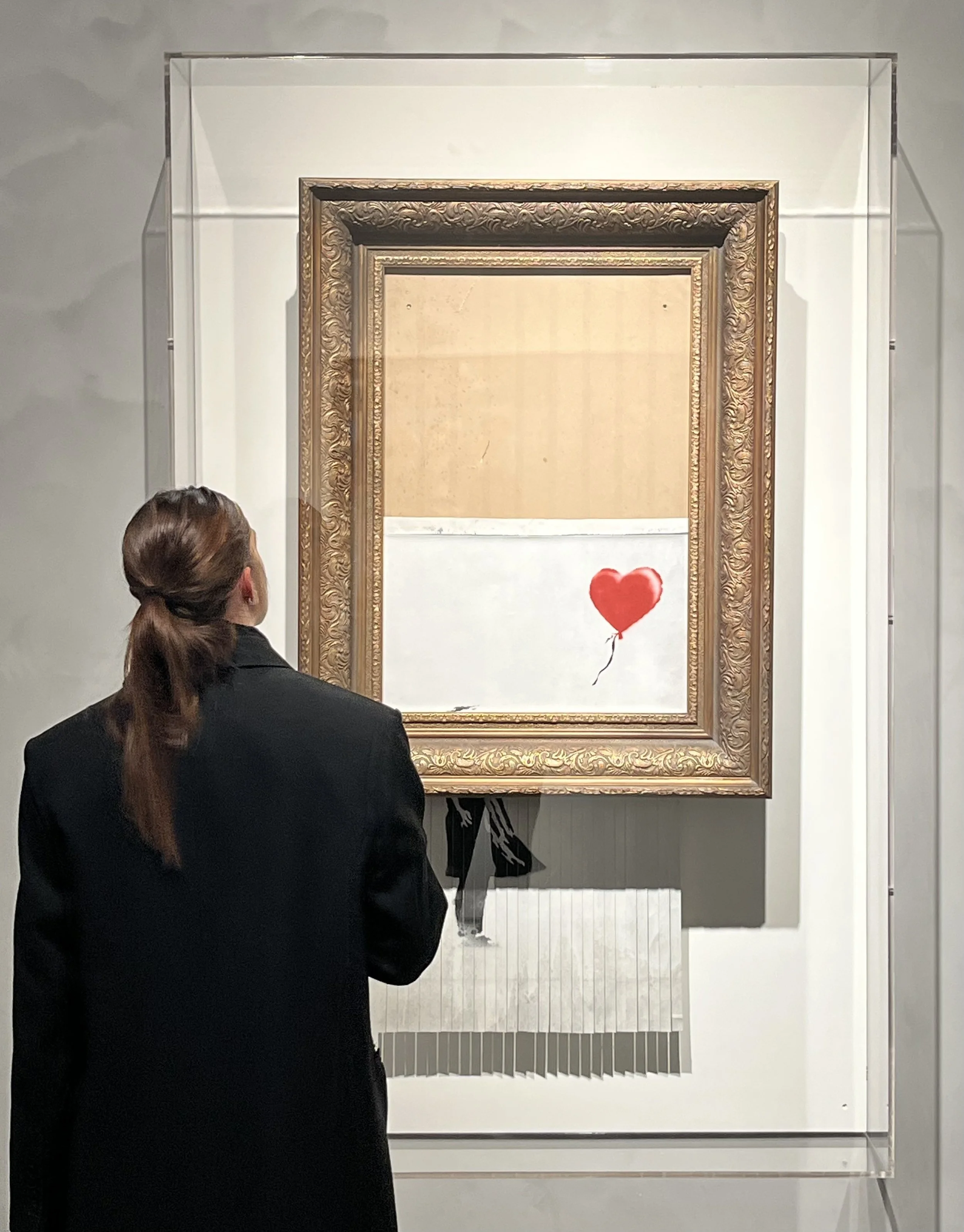
Banksy's Girl Without a Balloon, which gaveled for $1.4 million at Sotheby's in London. Photo by Lisa Freeman
The deeper you go, the more ridiculous it gets. There’s Salvador Dalí's Gradiva (1931), Gustav Klimt's Dame mit Fächer (1917–18), Frida Kahlo's self-portrait with monkey and parrot from 1942. Joan Mitchell's King of Spades (1956) and Clyfford Still's 1949-A-No. 1 show Abstract Expressionism in full throat. Piet Mondrian's Composition No. II (1930) and Gerhard Richter's Zwei Kerzen (1982) trace abstraction's evolution across five decades. Georgia O'Keeffe's Black Petunia and White Morning Glory I (1926) and John Singer Sargent's Group with Parasols (1905) anchor the American tradition with flowers and afternoon light.
The exhibition seeks to answer the question: What makes an icon? Some of the works are iconic because the subjects were made that way by the artists (O'Keeffe’s flowers, Hockney’s swimming pools); others are iconic thanks to the idiosyncratic approach of the artist (Warhol’s Marilyns, Kahlo’s self-portraits). Basquiat's Untitled is iconic because it was made by an artist working at the pinnacle of his powers. Rarity can also render a piece iconic: witness Banksy's Girl Without Balloon. Then there are those that are iconic because of their otherworldly performance at auction: Johns's False Start, and de Kooning's Interchange.
“An artwork becomes iconic when it transcends its material form to become part of a universal cultural language—instantly recognizable, endlessly reproduced, and symbolically powerful,” Sotheby’s said in its introduction to the exhibition. “In their status as icons, each has entered the zeitgeist of collective memory as both object and symbol, representative of something uniquely singular to the work itself and to our material culture at large.”
At the same time, pulling works from private collections—some unseen publicly for decades—is something of a holiday gift in itself since there’s no guarantee that any of them will ever be seen in public again. None of the pieces are on display to be sold, of course, but market forces certainly suggest that everything is for sale if the price is right.
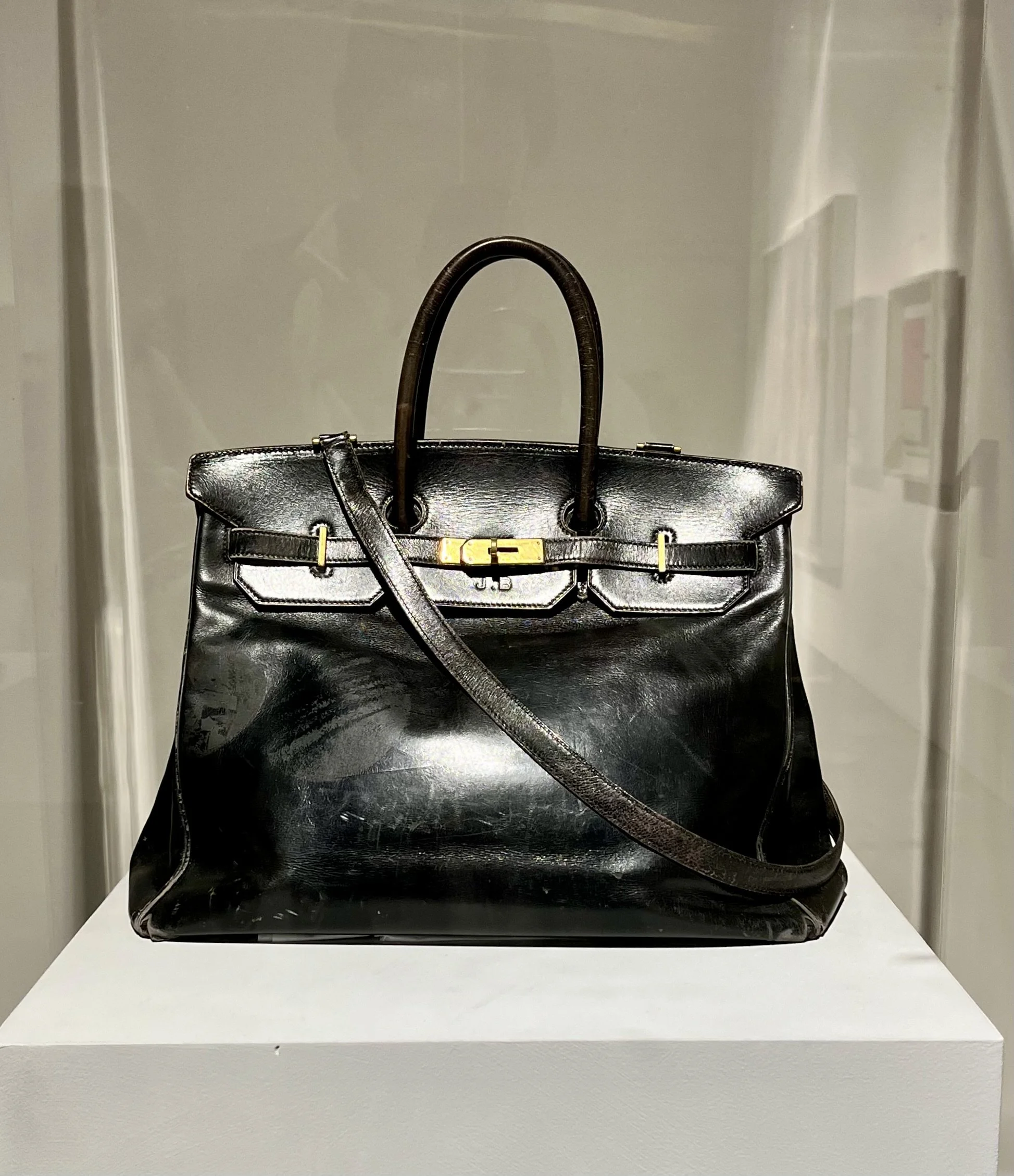
THE Birkin bag, the very first one, owned by Jane Birkin and sold at Sotheby’s Paris for $10 million this year. Photo by Lisa Freeman
Which brings us back to that Christmas shopping mission. There’s one item here that would make a terrific gift for the collector who has everything: an Hermès Birkin bag. As Sotheby’s notes, any Birkin handbag represents “a unique fusion of craftsmanship, rarity, and cultural cachet, its name synonymous with elegance and desire.” On display here is THE Birkin bag, the very first one, owned by Jane Birkin herself. It sold at Sotheby’s Paris for $10 million this year.
Sotheby's is publishing Icons: 100 Extraordinary Objects from Sotheby's History with Phaidon, dropping globally January 7, 2026. The show runs through December 21 at 945 Madison Avenue. Admission's free, which means you don't need Griffin money to see what $2 billion looks like on the walls. You do need to make a reservation through Sotheby's website, though.