When Hercules Laughed: Siena Bronze at the Frick
Mona Lisa’s enigmatic grin notwithstanding, it doesn’t seem like there was a lot of smiling going on in Renaissance Italy, judging by the surviving art work. And, if you look only at sculpture, things seem even more gloomy.
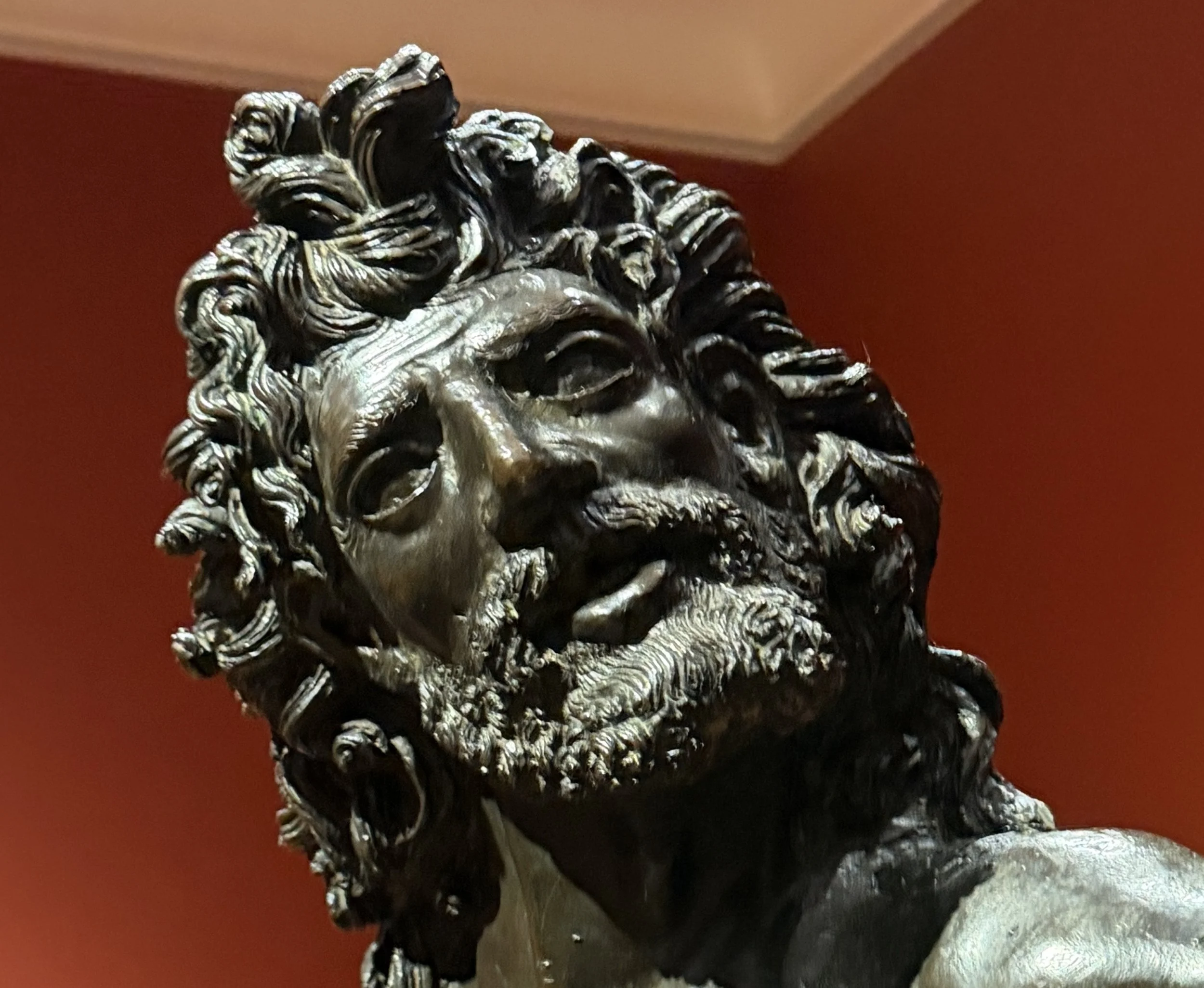
Which makes the bronze Hercules Fighting Achelous a curious piece indeed. The 1490 work by Giovanni di Stefano is a centerpiece of Siena: The Art of Bronze, 1450-1500, opening shortly at the Frick Collection. It features, heaven forefend, a laughing Hercules, apparently bemused by the wriggling snake he holds nonchalantly in his left hand.
Giulio Dalvit, the Frick’s associate curator who organized the show, said during a press preview that di Stefano, a “little known, but fabulous sculptor," succeeded in creating one of the few sculptures of the period to feature a subject with a gleeful expression.
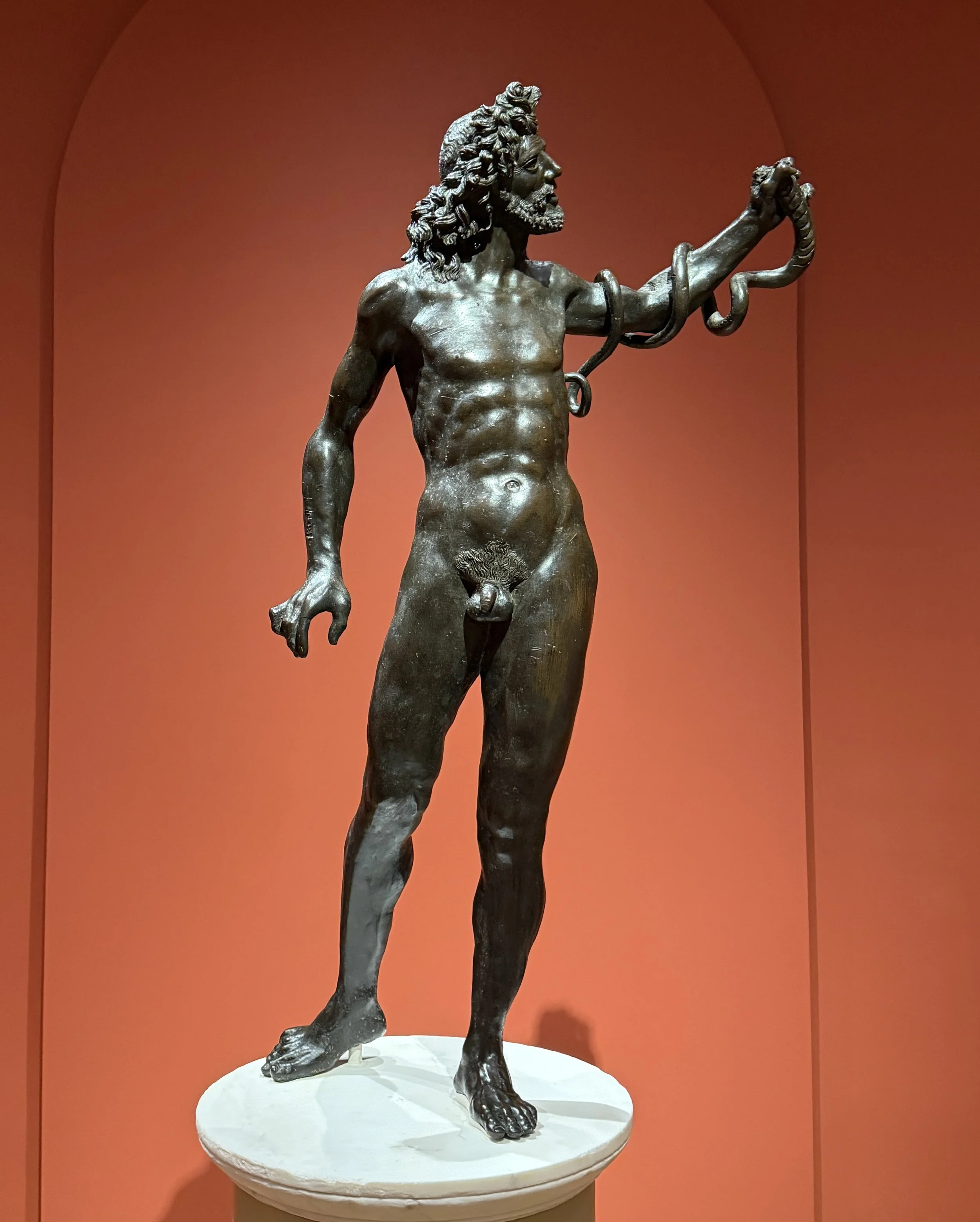
Hercules Fighting Achelous a 1490 work by Giovanni di Stefano at the Frick. Photo: J. Scott Orr
“It really shows this very rare iconography of Hercules laughing at the river god Achelous, who has just transformed himself into a serpent. And Hercules looks at him and laughingly says, ‘Who do you think you are? I've defeated the many-headed Hydra. Do you think I'm scared of you, single-coiled little serpent?’" Dalvet said.
“It’s a rare case of a sculpture showing a smile. When you think about it there are very, very few sculptures smiling that we know of,” he added.
Possibly the only other example of a smiling sculpture from the period is a 20-inch-tall clay piece called Virgin with the Laughing Child that is believed to be the work of Leonardo da Vinci. That piece may have gotten da Vinci in a bit of a stew when it was created around 1472, since, as the Guardian reported in 2019, “portraying a laughing Christ in the 15th century was not only radical, but practically blasphemous."
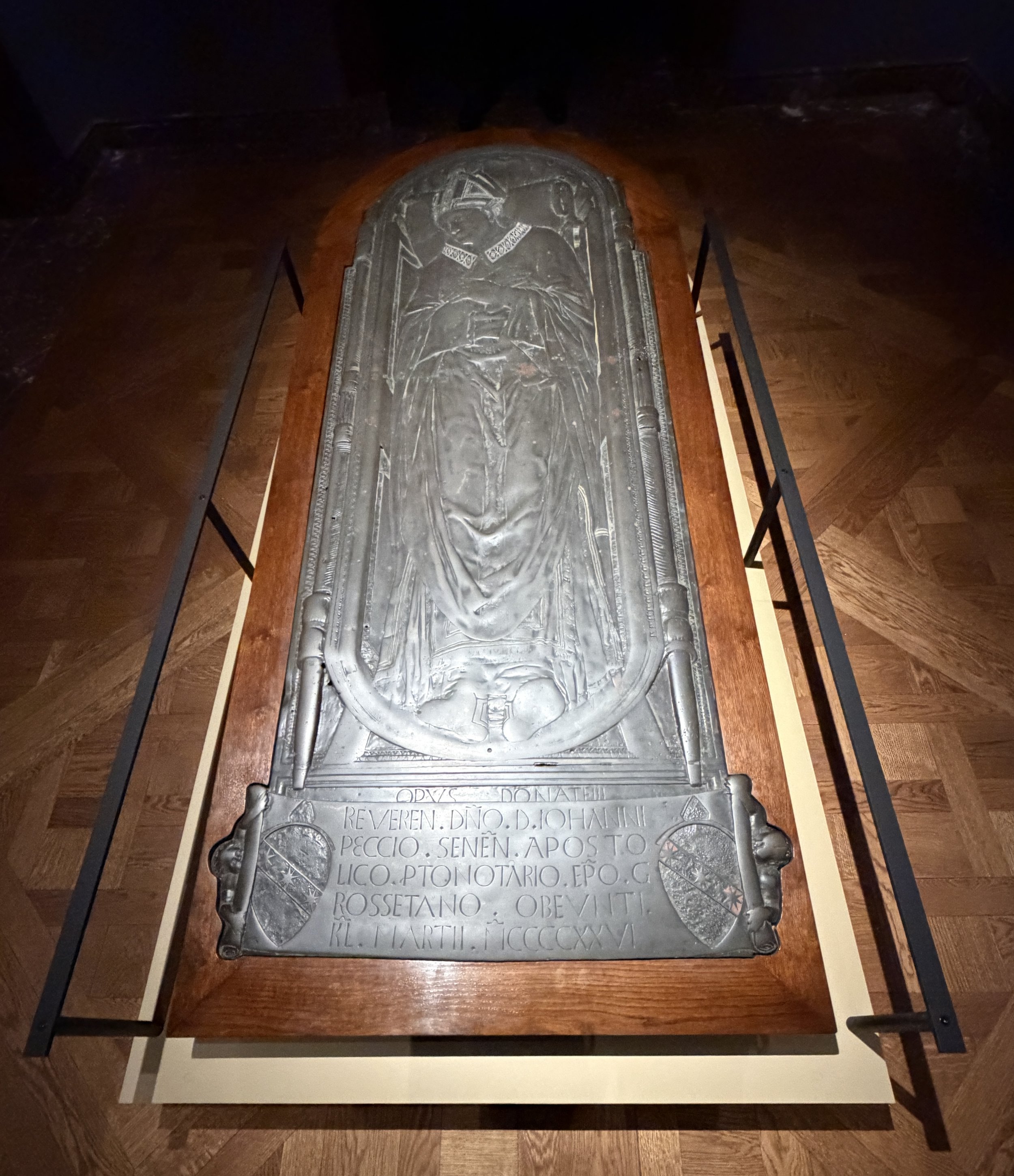
Donatello's tomb slab of Giovanni di Bartolomeo Pecci, Bishop of Grosseto and Istia d'Ombrone, cast around 1452. Photo: J. Scott Orr
The Hercules statue alone is worth the trip to Museum Mile, but Siena: The Art of Bronze is way more than that. It’s probably the first exhibition ever to argue that Siena—long overshadowed by Florence—was itself a golden-age center of bronze sculpture. The exhibition features nearly 40 works, many never before shown outside Tuscany.
“Between 1450 and 1500, almost nowhere in Italy did local artistic traditions rely so heavily on a single medium as Siena’s did on bronze. Yet, the Tuscan city has been celebrated chiefly for its paintings,” Dalvet said.
Making Siena’s case is Donatello's tomb slab of Giovanni di Bartolomeo Pecci, Bishop of Grosseto and Istia d'Ombrone, cast around 1452. The monumental bronze, inlaid with traces of enamel or resin, is one of only eight signed works by Donatello in existence.
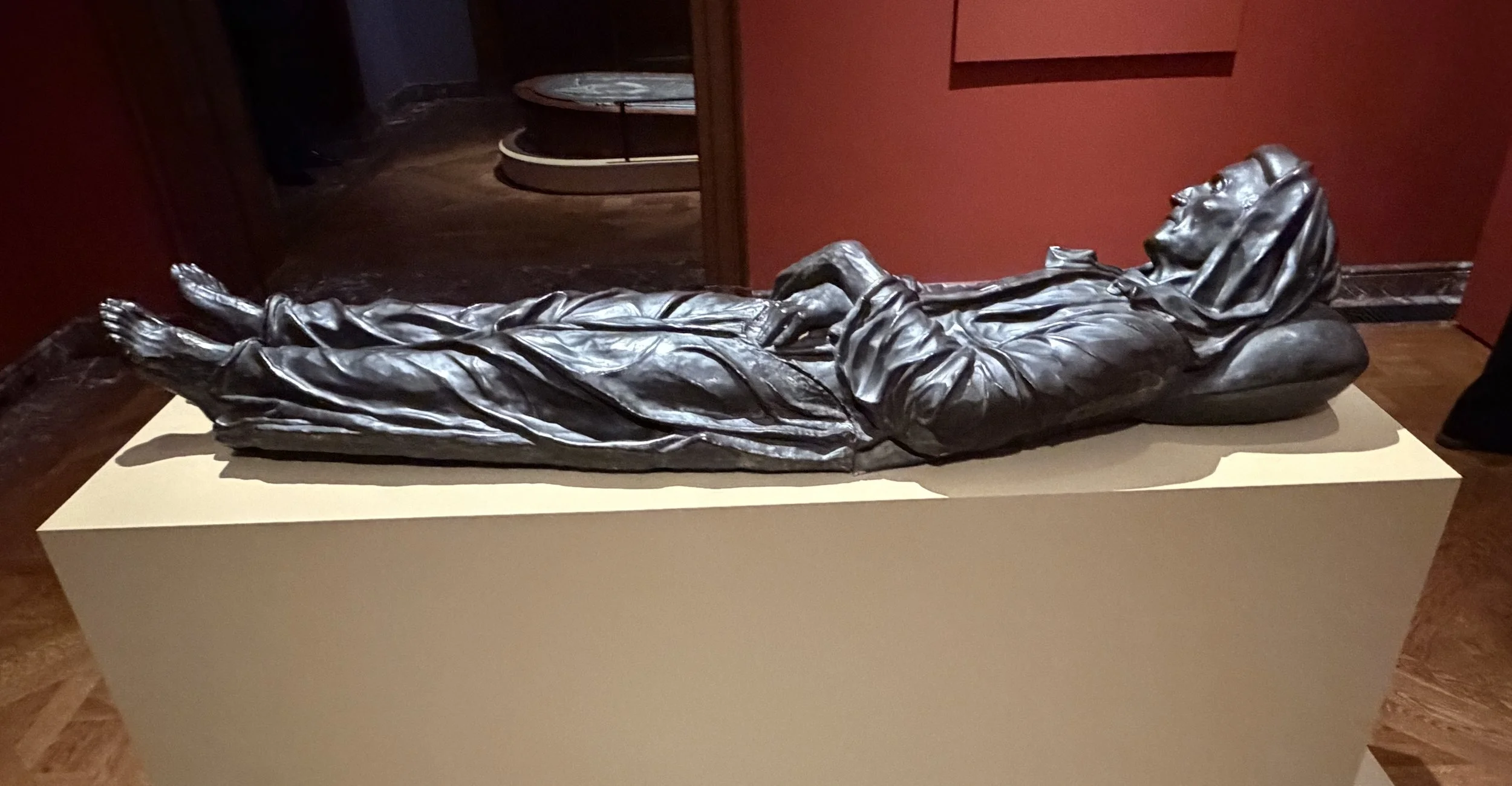
effigy of Mariano Sozzini the Elder, late 1460s or early 1490, attributed to Vecchietta or Francesco di Giorgio. Photo: J. Scott Orr
Then there’s the effigy of Mariano Sozzini the Elder, late 1460s or early 1490, attributed to Vecchietta or Francesco di Giorgio, on loan from Florence's Bargello. It is the only bronze effigy of a layman to survive from the period (Sozzini was a well-known jurist and a friend of Pope Pius II).
In addition to the statues, there are reliefs, candelabra, and medals. There’s Vecchietta's Resurrection of Christ, Francesco di Giorgio's Bellerophon and the Chimera and a second David with the Head of Goliath, an ornate candelabrum made for Federico da Montefeltro's Urbino palace, a gilded sword-pommel relief, a horse ring and flagpole torchère, plus a room of portrait medals of rulers, humanists, bankers and soldiers.
Siena: The Art of Bronze, 1450–1500 opens October 15 and runs through January 18, 2027, the Frick Collection, 1 East 70th Street, New York City.