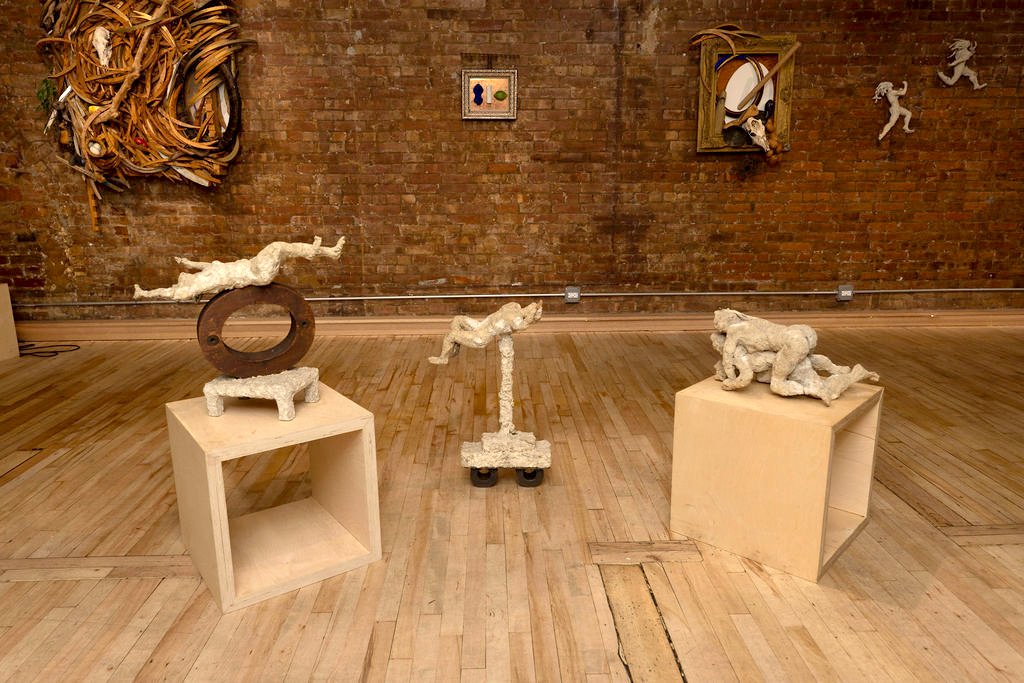
Gallery view Carolee Thea: Deconstructing Identity, Photo: Luis Enrique Rivera
In 1996, following the death of her mother, Carolee Thea stopped making art, explaining, “Making art had given me a safe place, independent from my birth family,” and confessing that “They had always seemed to siphon my strength.” After her mother’s death, Thea turned to writing, authoring books on art curation and, more recently, publishing her memoir. The exhibition Carolee Thea: Deconstructing Identity, at SPACS Gallery on West 27th Street, examines her sculptural work from 1985 to 1992. The exhibition was thoughtfully curated by Sabrina Wirth, who also edited Thea’s memoir.
Stepping off the elevator directly into SPACS’s gallery space, one immediately encounters Thea’s work. A long exposed-brick wall opposite the elevator displays several of her large wall-hung sculptures alongside smaller figurative works. Directly opposite the elevator is her enigmatically titled sculpture The Wedding (1987), which is an explosion of energy. Constructed from wooden furniture parts and picture frames, the sculpture incorporates multiple interwoven layers of curved wooden pieces that create the suggestion of a nest. This reference is reinforced by a basket containing egglike shapes and plastic vines with leaves, as though gathered by a bird and incorporated into its nest. The nest also incorporates other found objects, including an antique thread bobbin that reinforces its domestic associations and a brass horn that might suggest the announcement of a birth emanating from within. The emphasis on nest-making and birth is counterbalanced by an animal skull, reminding the viewer of the fragility of life. What catches the viewer’s eye amid the chaos, however, is a small framed reproduction of Thomas Gainsborough’s The Blue Boy, which adds a layer of mystery to the sculpture.
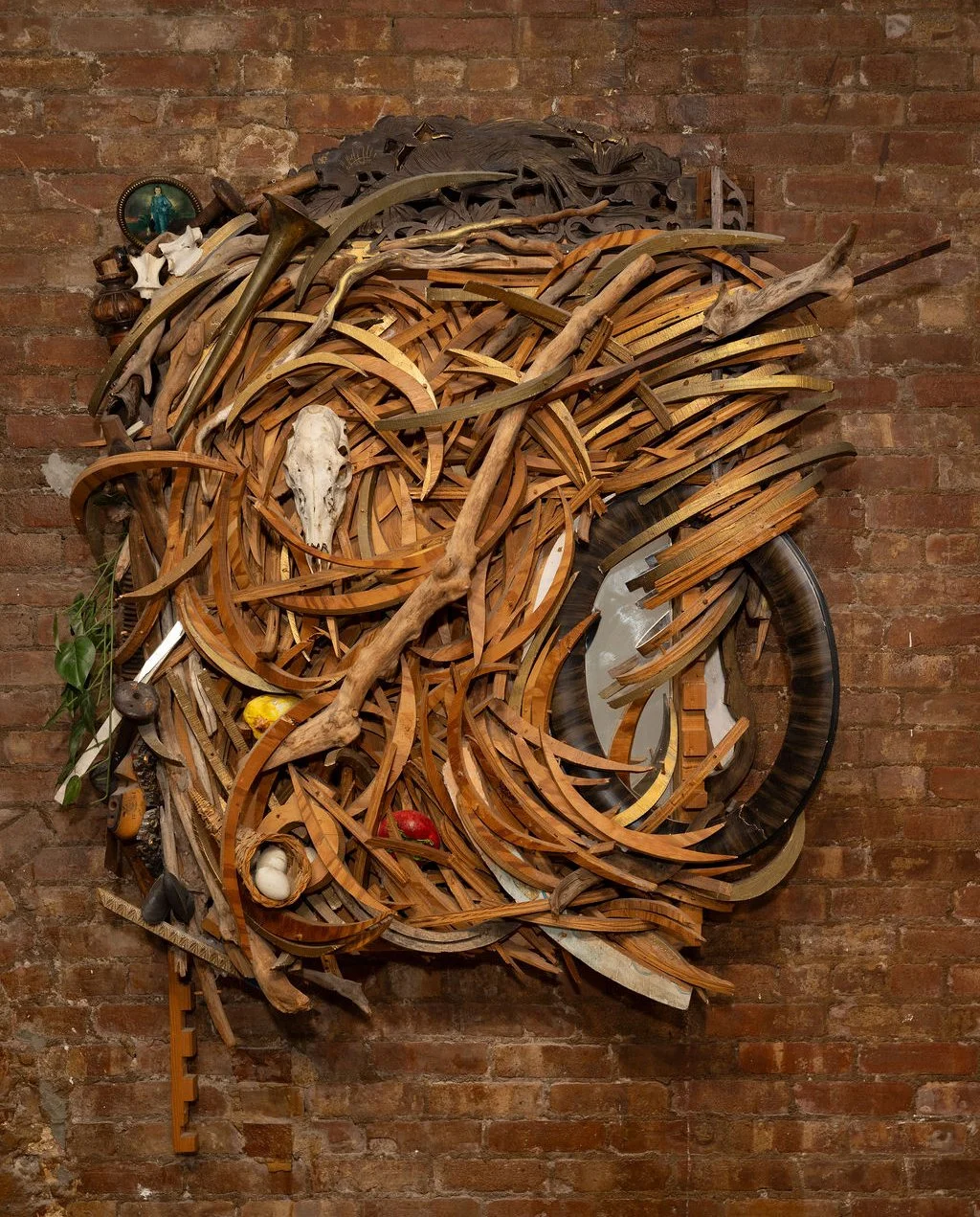
The Wedding, 1987. Photo: Luis Enrique Rivera
Thea’s choice of The Blue Boy is significant, as the color blue appears prominently in several other works in the exhibition. Her sculptures Untitled, Untitled cars, and Reposition all incorporate a vibrant blue reminiscent of Yves Klein’s signature color. The sculpture Untitled (1987) is tucked into a gallery niche around the corner from the elevator. Mounted alone on the wall, it incorporates an ornate gold-painted frame. Like The Wedding, it features an explosion of curved wooden pieces emanating from the frame. Almost concealed within this jumble are a doll’s head and foot, along with plastic fruit, giving the work a reliquary-like quality. All of the objects contained within the frame are painted a vivid blue. Thea’s fascination with the color blue, however, has a more personal origin, stemming from a childhood rivalry with her sister, which she discusses in her recently published memoir, A Scheme to Annihilate Magnificent Distances: A Memoir.
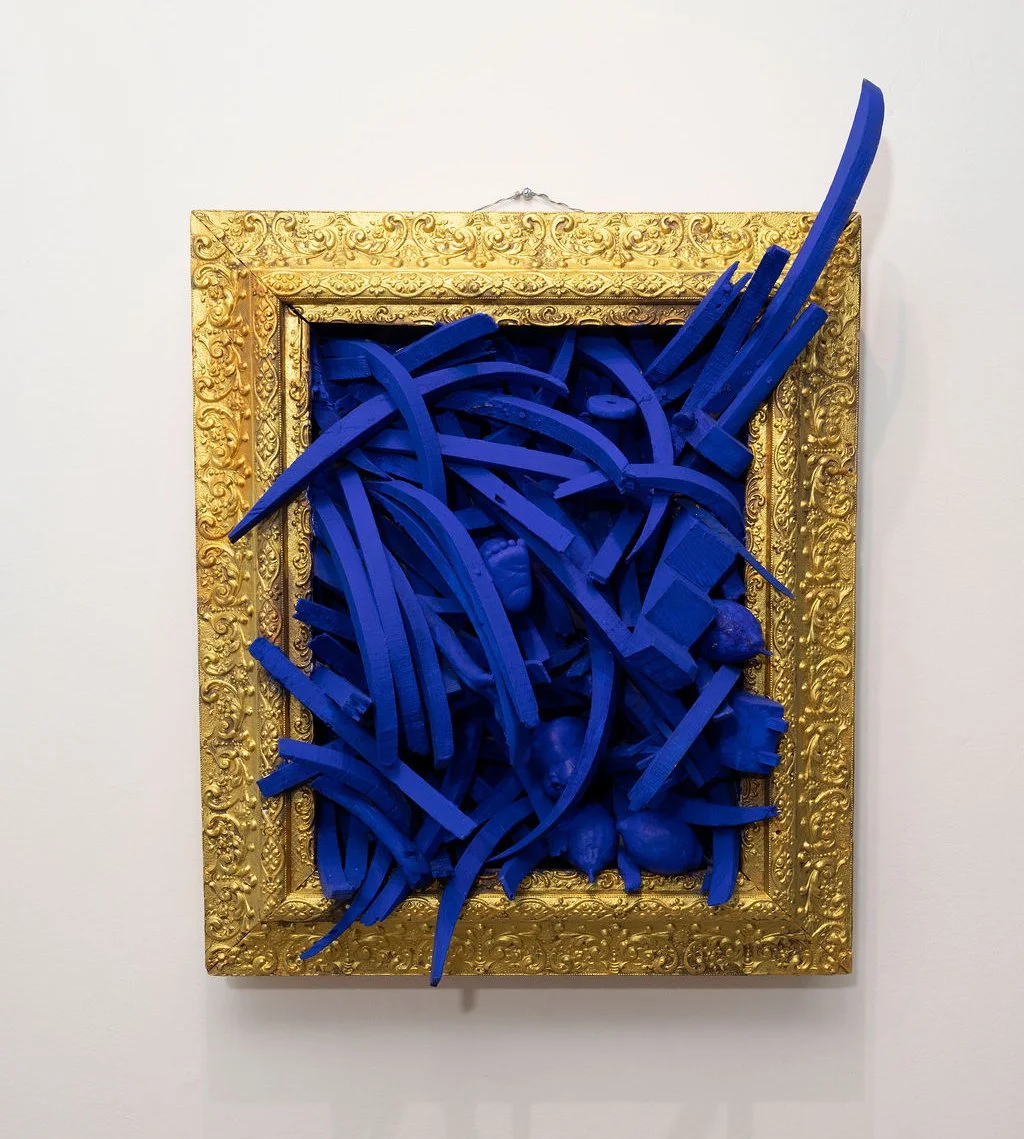
Untitled, 1987. Photo: Luis Enrique Rivera
Reposition (1987) is Thea’s most minimalist work in the exhibition. Unlike her other sculptures, which break apart and extend beyond the boundaries of the picture frame, here the frame functions as an actual frame, containing the objects within. A metal rake head is attached to the top of the frame, echoing, at least to me, the pitchfork held by the figures in Grant Wood’s American Gothic. Within the frame, a blue-painted plastic doll reclines on its back, legs crossed and arms positioned behind its head. Seen from a distance, the doll recalls the prehistoric sculpture Venus of Willendorf. It is accompanied by a white cylinder and a green plastic lime. The simplicity of the composition, combined with Thea’s seemingly deliberate selection and arrangement of objects, makes the work all the more enigmatic, perhaps suggesting a commentary on motherhood, domestic life, and the complexities of female identity.
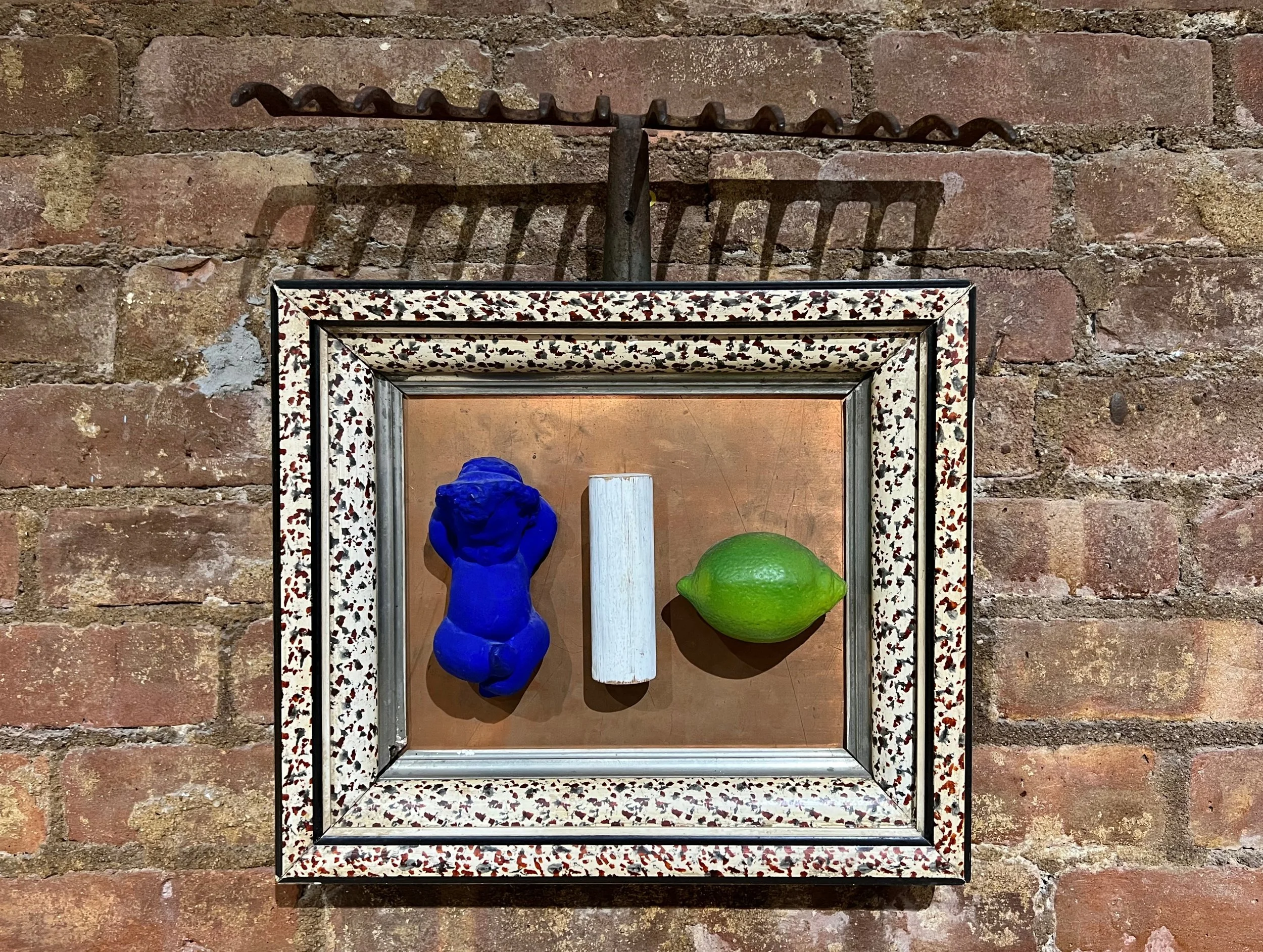
Reposition, 1987. Photo: Michael Wolf
Several other wall-mounted sculptures employ the device of objects breaking free from the confines of the picture frame. A Vanitas (1986) references 16th- and 17th-century Dutch still-life paintings, which used symbolic objects as reminders of the transience of life. The sculpture incorporates the crescent-shaped wooden pieces found in her other works, along with an assortment of found objects arranged as a still life, most prominently an animal skull. Skyground (The Bride) (1985) is considered by Thea to be a self-portrait, created at a time when she felt self-conscious and insecure as an artist. She included a drawing of a rhinoceros as a representation of herself. Interestingly, it is the only sculpture in the exhibition with a textured, colorful, painted surface, with the evidence of the brushwork remaining visible.
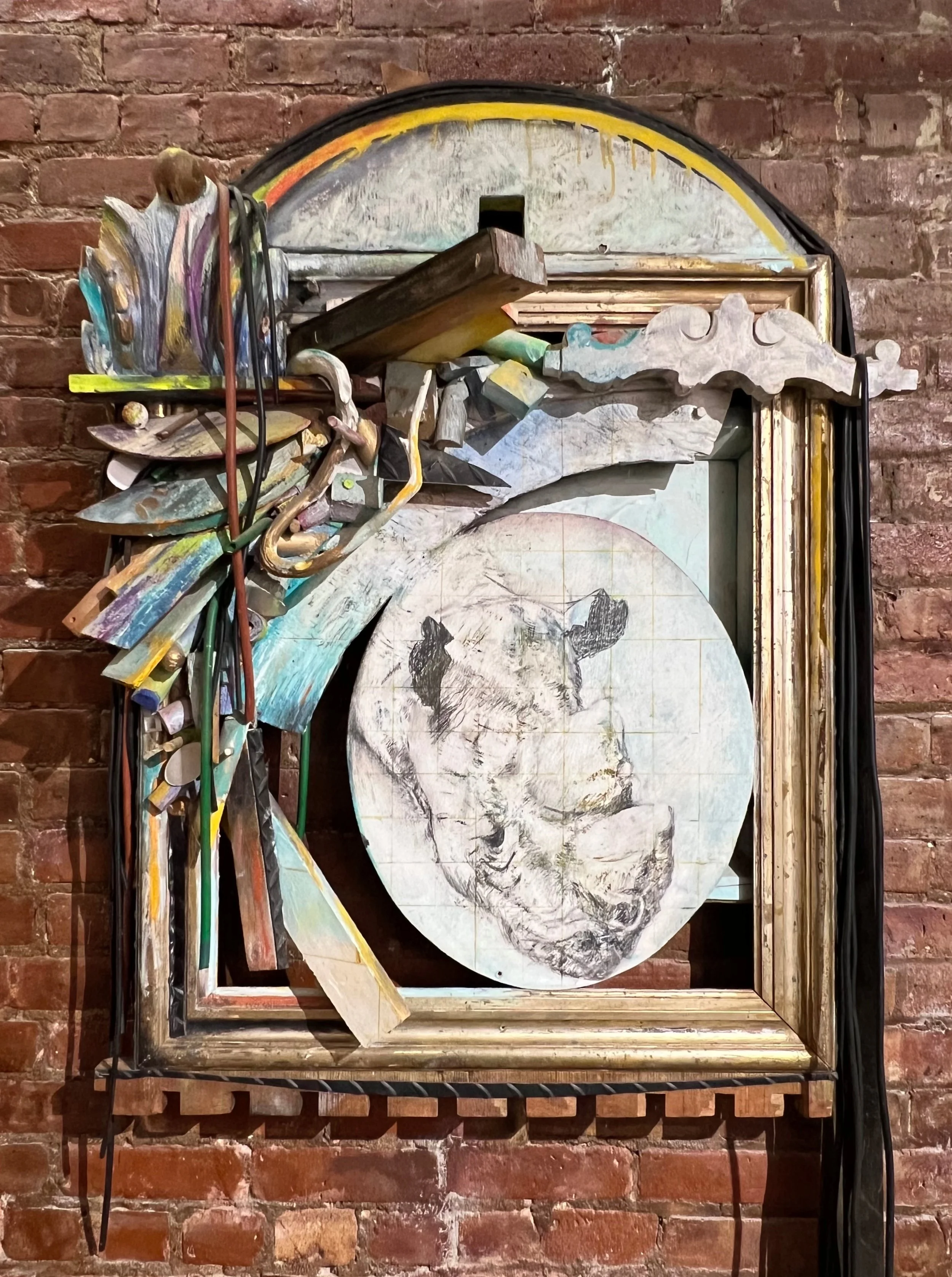
Skyground (The Bride), 1985. Photo: Michael Wolf
Attached to and projecting from the wall is a series of figurative sculptures, some of which have previously been exhibited at the Hofstra University Museum of Art and the Queens Museum. In contrast to many of the wall-mounted works, which are constructed from wood and discarded objects associated with human consumption that Thea collected from junkyards, these figures are made from modeled chicken wire and papier-mâché. The sculptures draw on the Greek myth of Apollo and Daphne, in which Daphne, a mortal woman devoted to chastity, is pursued by the god Apollo. As Apollo catches up with her and touches her, Daphne transforms into a laurel tree to protect her chastity. Thea’s small sculptures depict Daphne in several poses inspired by her own experience with dance. The chicken-wire armature emerges from beneath the papier-mâché at the hands and feet, suggesting branchlike forms that recall Bernini’s iconic sculptural interpretation of the myth. The transformation of Daphne into a tree also suggests a deeper personal significance for Thea. Daphne’s escape from Apollo’s pursuit can be read as a metaphor for Thea’s own desire to break free from the constraints of traditional family structures and expectations. Like Daphne, she seeks autonomy and the freedom to define her own identity.
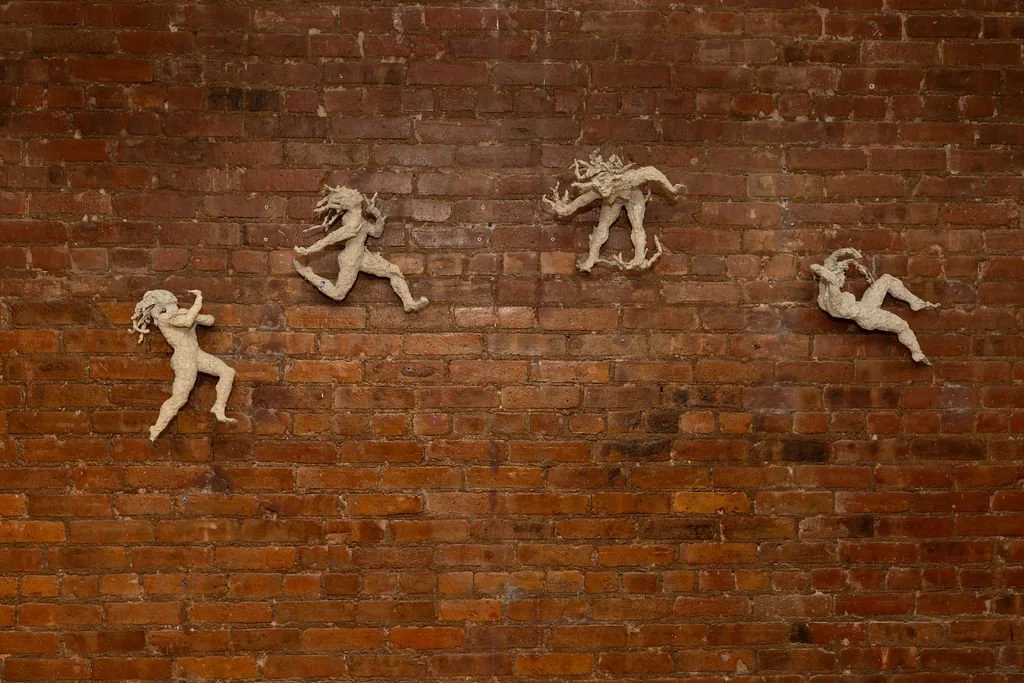
Daphne 1, 2, 3, and 4, 1990, Photo: Luis Enrique Rivera
Thea experimented with a variety of art forms, including large-scale installations, earthworks, performance, and film. One significant earthwork project titled Ceremonial Conjecture was completed at the Morris Museum in New Jersey in 1981–82. In collaboration with Penny Kaplan, who was one-hundred and two at the time, Thea used heavy earthmoving equipment to create a sweeping, undulating line and Mayan-inspired pyramid structures made of earth and grass. In her 1977 Super 8 film Bronxville to Grand Central Station, Thea documents her commute from Bronxville in Westchester County to Grand Central Station in real time. The film is silent, save for the sound of the moving train.
Only one drawing is included in the exhibition, displayed in a back side gallery that is well worth seeking out. Temple Impression (1978), a large pastel and graphite drawing on rag paper, consists of a series of rectilinear shapes arranged in arches and a cross-like pattern, surrounded and overlaid with haptic scribbled lines. The lines connect the drawing to her sculptures with their sense of movement. To my eye the abstract composition suggests tree branches in a graveyard. Thea created the work following the death of a friend, giving the drawing an underlying sense of mourning and remembrance.
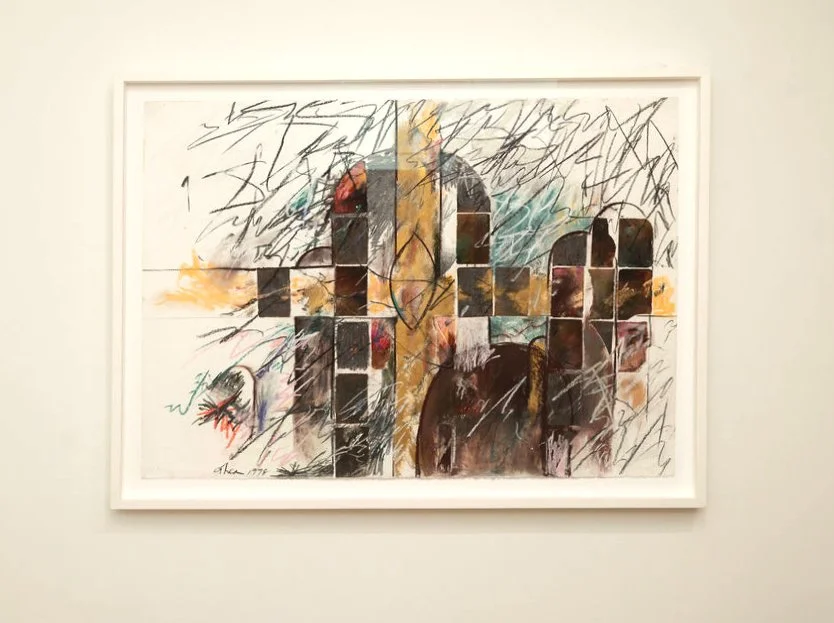
Temple Impression, 1978. Photo: Luis Enrique Rivera
The inclusion of this single drawing leaves the viewer wanting to see more of Thea’s two-dimensional work. More broadly, the exhibition raises the question of what else Thea might have produced had she continued making art rather than turning her attention to writing. It offers a compelling glimpse into a remarkably productive period and leaves us wondering what might have followed.
Opening a little over a year ago. SPACS is a contemporary art gallery and cultural hub that brings together artists, audiences, and creative disciplines through exhibitions, artist residencies, and cross-industry collaborations. Its focus extends beyond presenting artwork to fostering cultural exchange, encouraging dialogue, and creating meaningful connections between artists, communities, and international audiences.
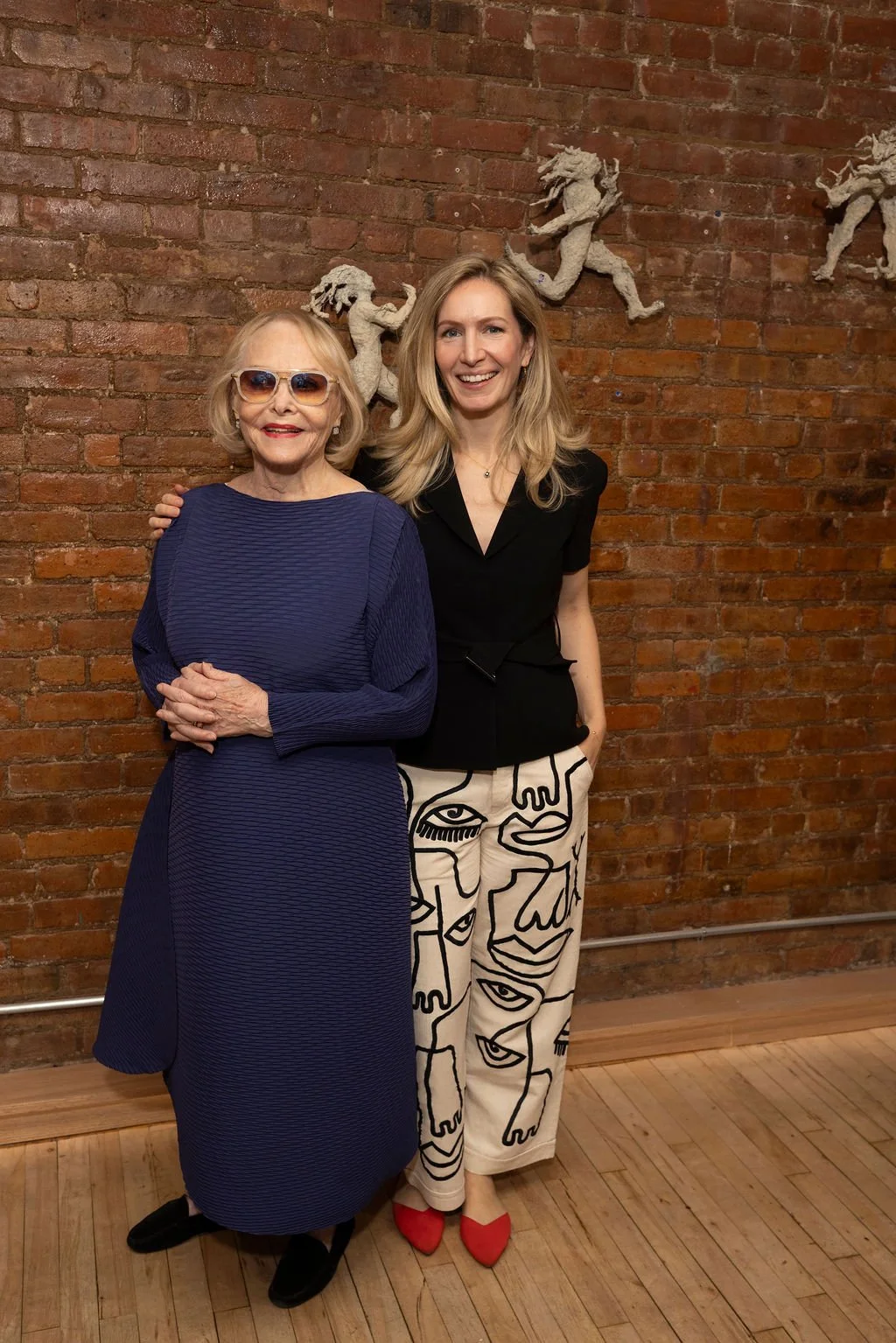
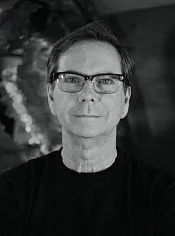
Artist Carolee Thea and Curator Sabrina Wirth. Photo: Luis Enrique Rivera
Carolee Thea: Deconstructing Identity, SPACS Gallery, 149 W 27th St Floor 3, New York City, though December 5.