Blood, Glitter and the Ghost of Richard Hambleton
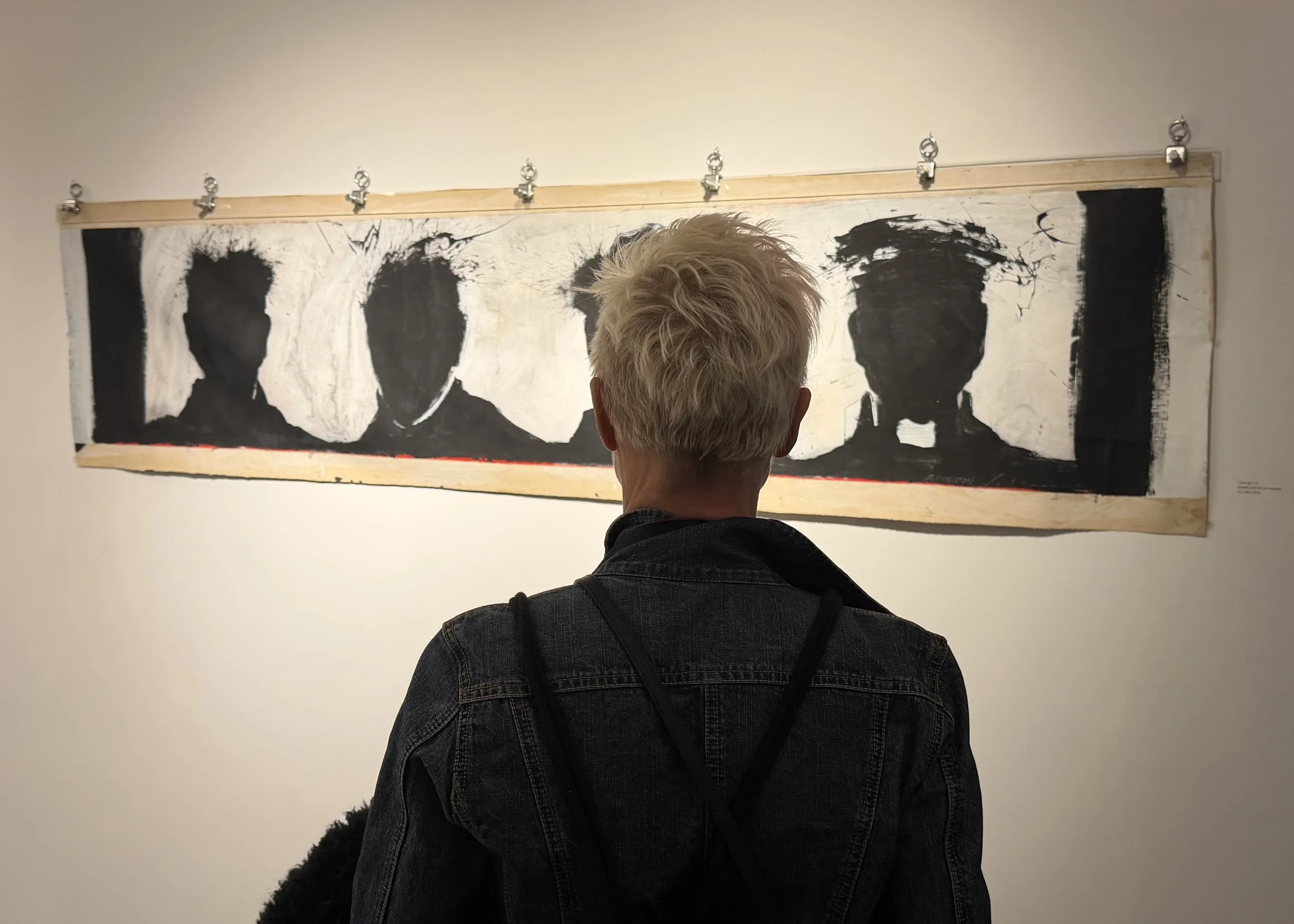
Photographer/artist Eva Mueller considers Richard Hambleton's undated Line Up. Photo by J. Scott Orr
The body was at the entrance to Freeman Alley, still warm, blood from multiple stab wounds pooling across the concrete. Above it on the wall, a black shadow figure stood watch, hands on hips, skull blown open in a halo of paint spatter as if from a combination of terror and dope sickness. The dark, violent scene captured, for a moment, the frightening tableau of death and danger that was all too common in this Lower East Side neighborhood in the early 1980s.
The shadow figure was painted by Richard Hambleton, the acclaimed street artist and unapologetic junkie they called The Shadowman. Hambleton spent years creating chalk outlines of fake murder scenes across 15 cities before moving to New York to paint his lurking silhouettes on the walls of neighborhoods where all too often the murders were real.
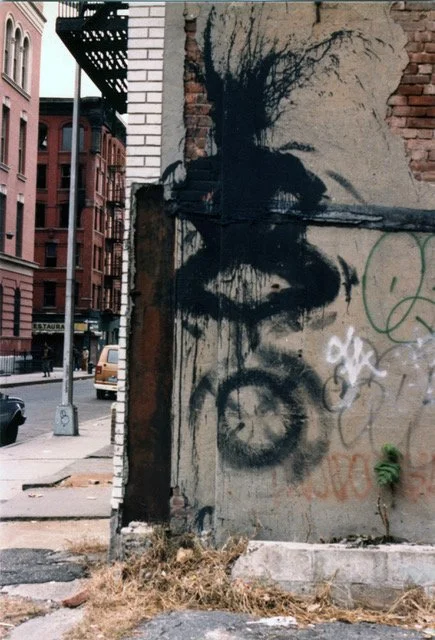
Richard Hamblelton street art in Freeman Alley in the 1980s. Photo courtesy Jimmy Wright
Today the gentrified Freeman Alley neighborhood hardly resembles the lawless landscape of 45 years ago. The alley is now a street art mecca with an upscale restaurant, a boutique hotel and a museum entrance. And the other night, just around the corner at Howl! Arts/Howl! Archive, a new show opened: Richard Hambleton: Blood & Glitter, the late street art legend’s latest exhibition.
“How appropriate that Shadowman, untouched by time, returns to his home neighborhood to shadow the gentrifiers,” said the artist Jimmy Wright, who bought a former stable at 1 Freeman Alley in 1980 and has lived there ever since.
“After Hambleton moved to the storefront at 5 Rivington in 1983, a shadow man appeared overnight in Freeman Alley and on the wall at the corner of Rivington and Bowery. Richard was by nature an outlaw, a trusted neighbor and watchman for the heroin dealer’s storefront next door at 7 Rivington St. and the block’s resident enforcers and cat burglars that were his immediate neighbors,” Wright said.
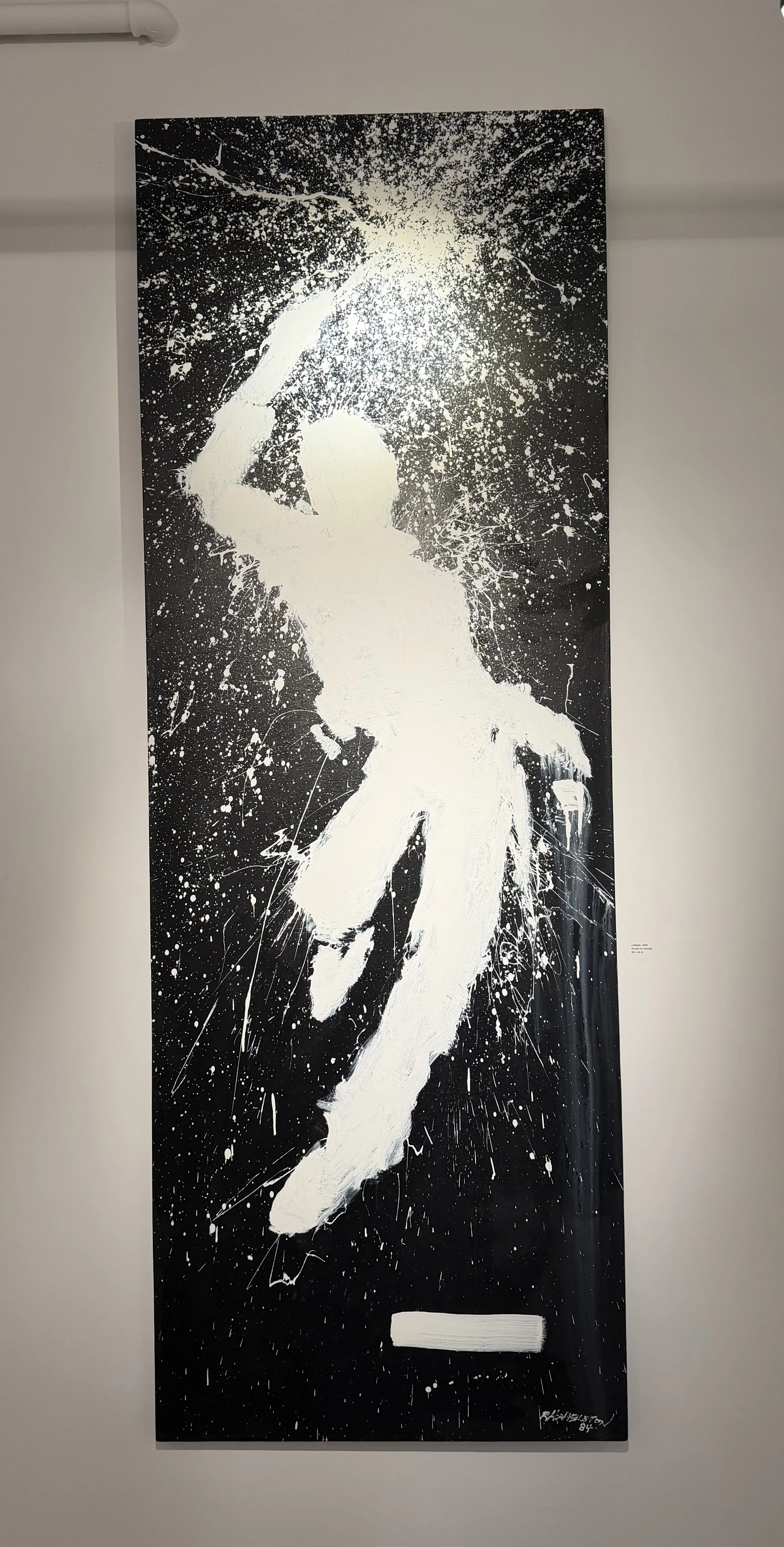
Richard Hambleton, Untitled, 1984. Photo by J. Scott Orr
The show, featuring works from across Hambleton’s career, demonstrates what he could do on canvas. One untitled piece from 1984 is a vertical black field with a white figure mid-explosion—arms up, paint radiating outward in every direction. It's the classic Shadowman in negative, the figure luminous rather than dark, but the violence of the paint application is pure Hambleton.
A much more recent 2003 piece reveals a maturing artist summoning his by then well-established shadow technique. It features two profile silhouettes in fine white line, facing each other barely a breath apart, while above them an explosion of dark paint fans upward like a storm system, or a crown.At the same time, though, the exhibition also presents an often overlooked side of Hambleton’s oeuvre.
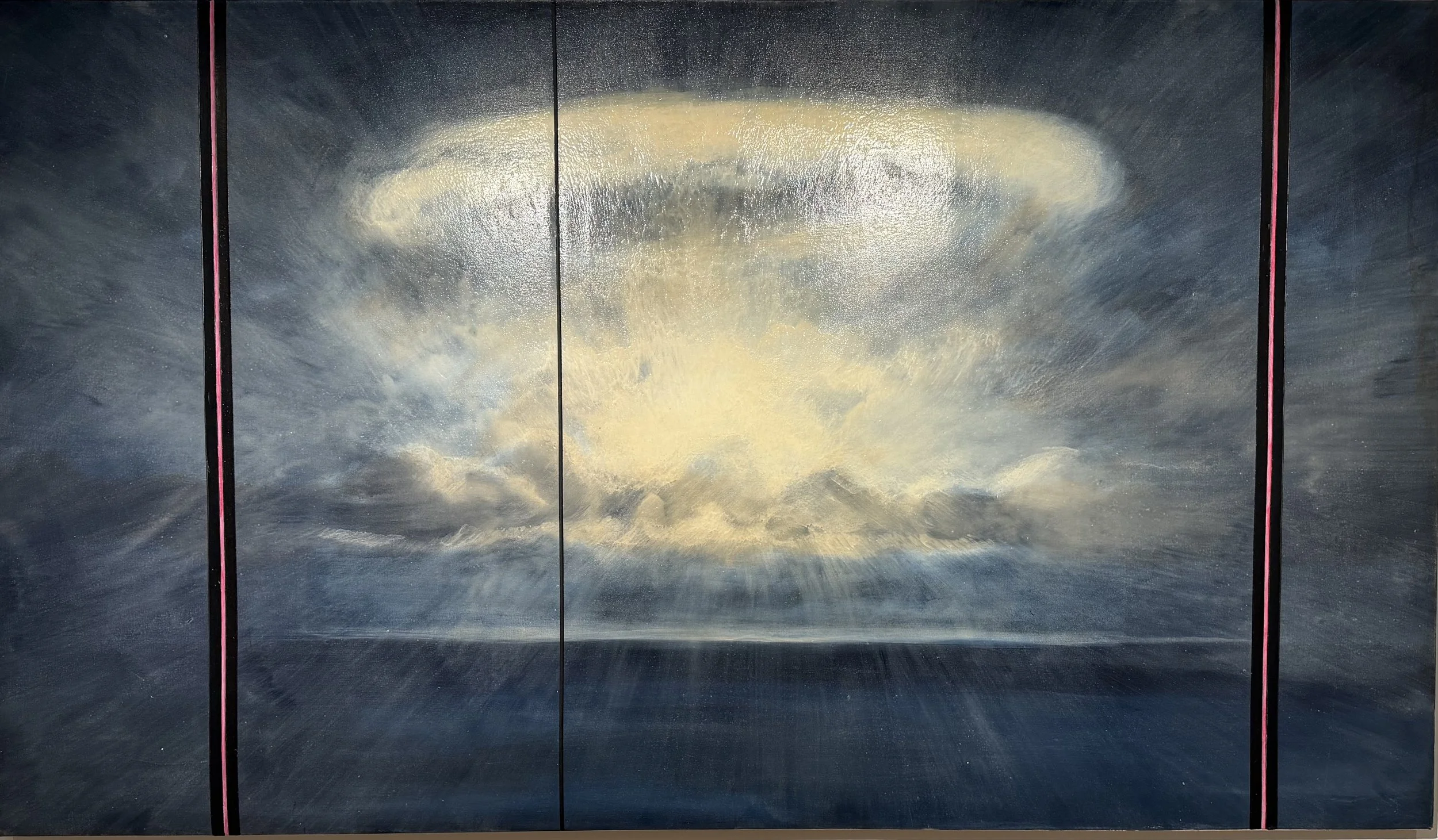
Richard Hambleton, A Light, 1986. Photo by J. Scott Orr
The 1986 piece A Light reveals the artist as an atmospheric painter, working a deep navy field with a roiling, luminous cloud mass at the center that reads simultaneously as nuclear detonation and divine revelation. The gold and silver leaf catching in the billowing upper formation gives the thing a genuinely unsettling beauty, as if Hambleton couldn't decide whether God was arriving or leaving.
It is Wright who recalled the night one of those enforcers did the stabbing described above. He is also the photographer who captured what is believed to be the only image of the alley’s Hambleton original Wright recalls the days when Hambleton haunted the neighborhood, well before the gentrification and attempts to commercialize the alley.
At the time, Freeman Alley was a heroin market, the kind of place where it was common for dead men to be found at dawn. It was Hambleton's neighborhood. He fit right in.
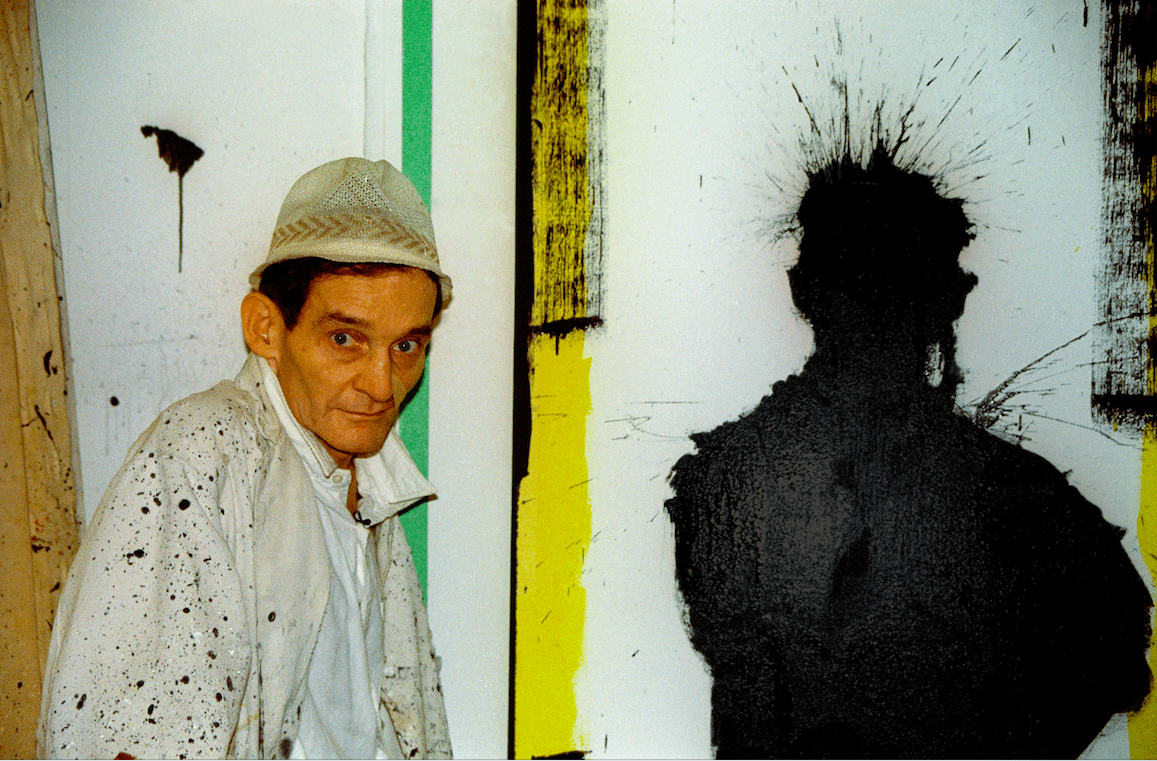
Richard Hambleton in an undated photo by Hank O'Neal.
Hambleton was born in Tofino, British Columbia in 1952, studied at the Emily Carr University of Art and Design in Vancouver, and co-founded the Pumps Centre for Alternative Art before ditching any semblance of a conventional career. His first major project, Image Mass Murder (1976–79), was exactly what it sounds like: chalk outlines of volunteer "victims" splattered with red paint across 15 cities, staged to look like real crime scenes. Police departments were not amused. Six hundred fake murders, no one knew who did them.
He landed in New York in 1979. "I painted the town black," he said — and he wasn't kidding. Starting around 1982, he put more than 450 life-size black figures on buildings and alley walls across Lower Manhattan, placed for maximum effect on unsuspecting pedestrians. No tag, no signature. Cab drivers hated them — the figures looked like they were trying to hail a cab. Nobody knew who was responsible.
"They could represent watchmen or danger or the shadows of a human body after a nuclear holocaust or even my own shadow," Hambleton said.
Hambleton, Jean-Michel Basquiat, and Keith Haring ran together in those years as the East Village scene turned from scrappy to sellable. Basquiat even tagged one of the Shadowmen near 34 East 12th Street, drawing his skull and crown over the figure — those hybrids are now considered prized objects.
At the time, Hambleton's canvases were moving at around $20,000 — slightly ahead of Basquiat's. By 1984, he was in the Venice Biennale and had painted 17 Shadowman figures on the East side of the Berlin Wall. Andy Warhol kept asking to do his portrait. Hambleton never found the time, and said afterward he wouldn't make that mistake again.
By 1985, Hambleton had retreated into his Lower East Side studio with heroin. As Haring and Basquiat died and the scene moved on, he grew reclusive, trading paintings for meals, eventually squatting in a shuttered East Village gas station where rats got at his canvases while he slept, until the landlord evicted him and threw the work in the trash. "Meet me at a cash machine," was how he reportedly arranged sales in those years. He had a line about it: "At least Basquiat, you know, died. I was alive when I died. That's the problem." — from Oren Jacoby's 2017 documentary Shadowman.
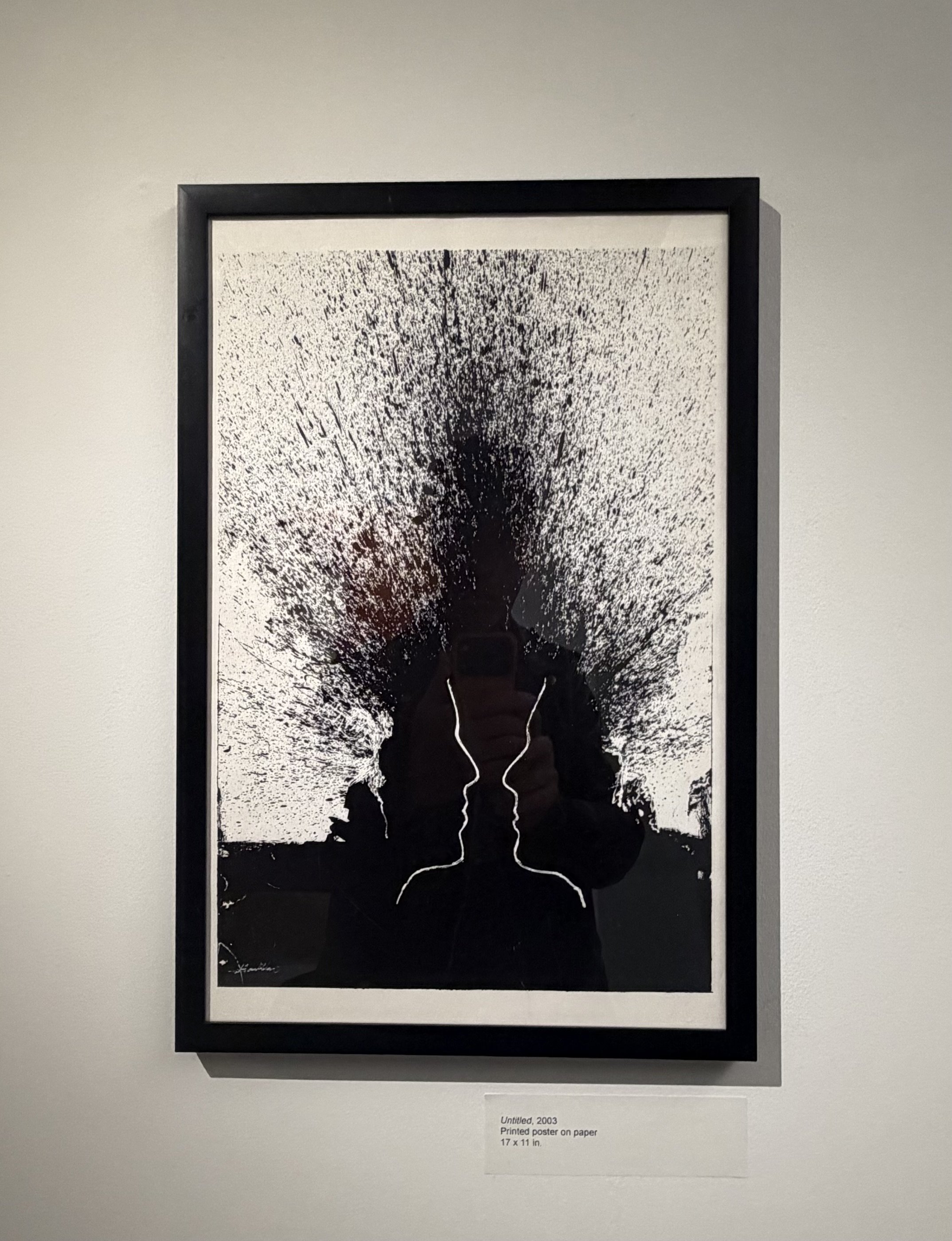
Richard Hambleton, Untitled, 2003. Photo by J. Scott Orr
There were comebacks. In 2007, Woodward Gallery gave him his first solo show in over 20 years—the Beautiful Paintings, landscapes threaded with gold and silver leaf, nothing to do with the Shadowman and everything to do with a painter who'd never stopped working.
In 2009, Giorgio Armani sponsored a retrospective that hit New York, Moscow, Milan, and London. At the 2010 amfAR dinner at Cannes, two of his paintings brought a combined $920,000. He reportedly celebrated with heroin and caviar from Russ & Daughters on Houston Street.
Skin cancer — untreated — went to work on his face. "Richard lost his entire face and one of his eyes was closed in the end," Kristine Woodward of Woodward Gallery told amNewYork. "He needed the heroin to help with pain control." He kept painting. At the Shadowman premiere at Tribeca in April 2017, he showed up in a wheelchair wearing a surgical mask. He died October 29, 2017, at 65, at a friend's apartment on the Lower East Side—weeks after seeing Jacoby's cut, days before a canvas went up at MoMA.
His work is in the permanent collections of MoMA, the Brooklyn Museum, and the Andy Warhol Museum. His auction record is $552,000.
Richard Hambleton: Blood & Glitter is at Howl! Arts/Howl! Archive, 250 Bowery. From Freeman Alley, a block and a half.