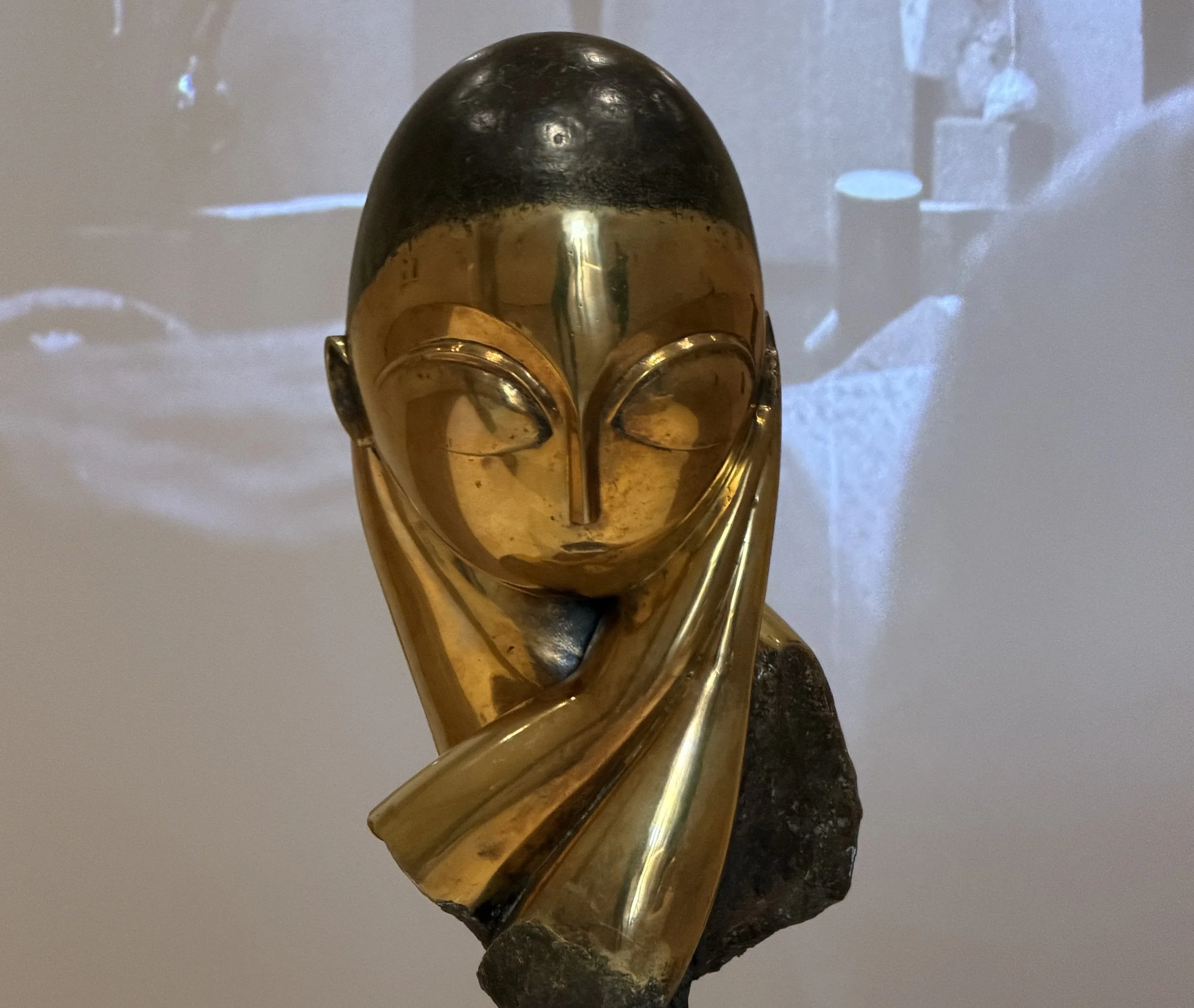
Mlle Pogany, version I, 1913 (after a marble of 1912). Photo: J. Scott Orr
In May, Constantin Brancusi's Danaïde sold during a remarkable auction at Christie’s for just shy of $108 million. It was the most ever paid for a Brancusi and the second most ever paid for a piece of sculpture, demonstrating anew the importance of Brancusi’s disruptive genius and the magic in his golden, gazing eggheads.
Now, Brancusi’s singular brilliance is taking over MoMA’s sixth floor with an exhibition of sculpture, photography and ephemera that makes the same argument Brancusi himself made for years, that the studio was a critical component of his work and in fact a part of the art. To Brancusi, the place, the process and the product were inseparable.
After 1920, Brancusi largely withdrew from public exhibitions in France, preferring to receive visitors at his studio on impasse Ronsin in Paris and show his sculptures exactly as he wanted them seen. For four decades he arranged and rearranged the rooms as a single evolving composition.
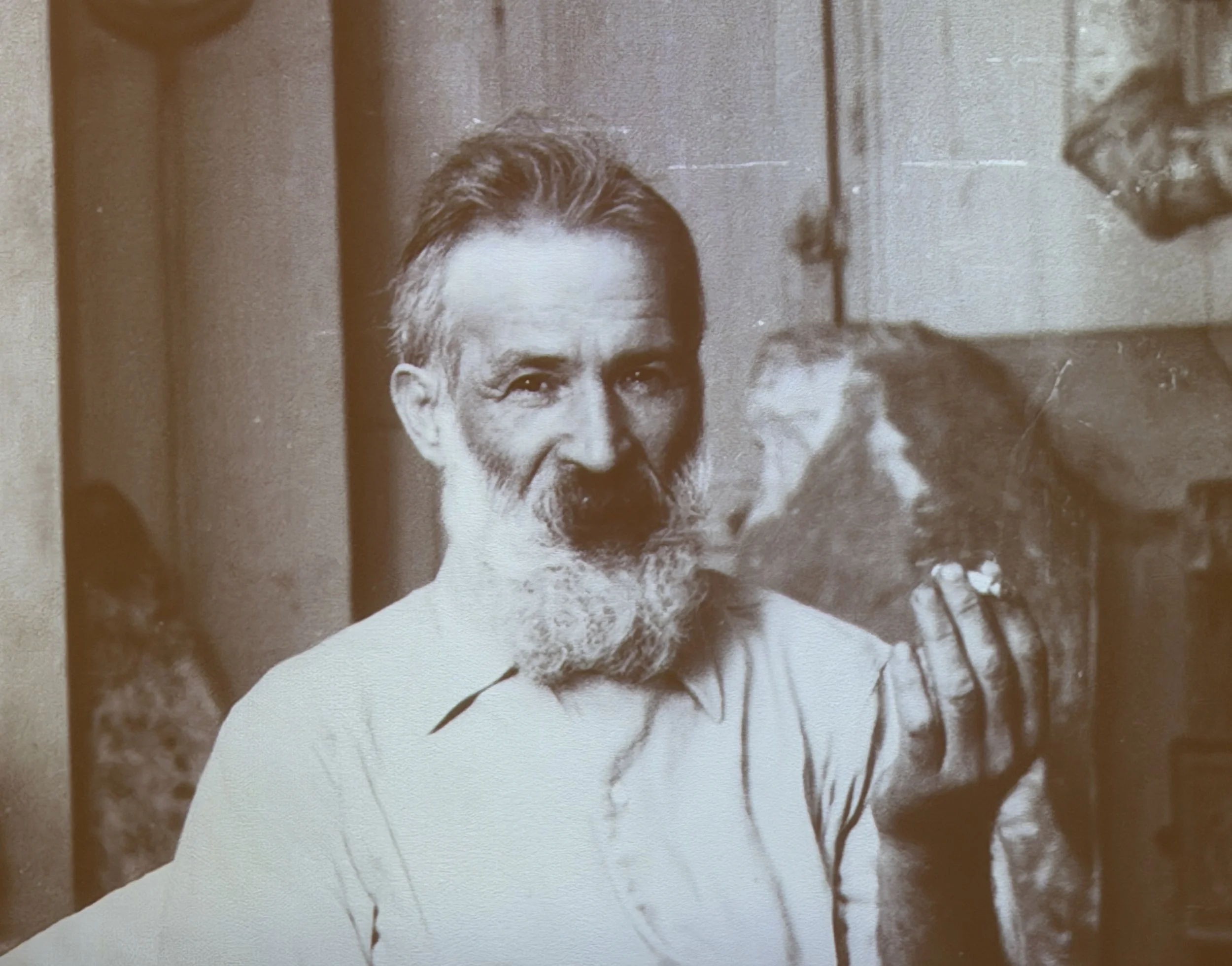
Brancusi, from a film shot in his Paris studio.
“It was there that Brancusi lived, and worked, and entertained, and crucially displayed his sculptures,” assistant curator Mia Matthias said during a press preview of the exhibition. “The studio was so important to Brancusi that he sought to preserve it in its entirety at the end of his life. We've taken a page from Brancusi's book, trying to evoke the dynamism of this singular space,” she said.
Brancusi: The Artist and His Studio, which opens to the public on October 25, is his first solo show at MoMA. It features rarely lent sculptures, hand-carved furniture and bases, films, photographs, tools, and archival materials from the Atelier Brancusi in Paris. Part of the Centre Pompidou, the atelier is closed for renovation, and that closure is this exhibition's luck.
“That was tremendously good news for New York audiences, because it means the very sculptures that are normally on limited display have been allowed to cross the Atlantic for the first time in decades. And they are not just any Brancusis. They really are Brancusi's Brancusis—the sculptures that were in his studio at the time of his death,” said guest curator Anne Umland.
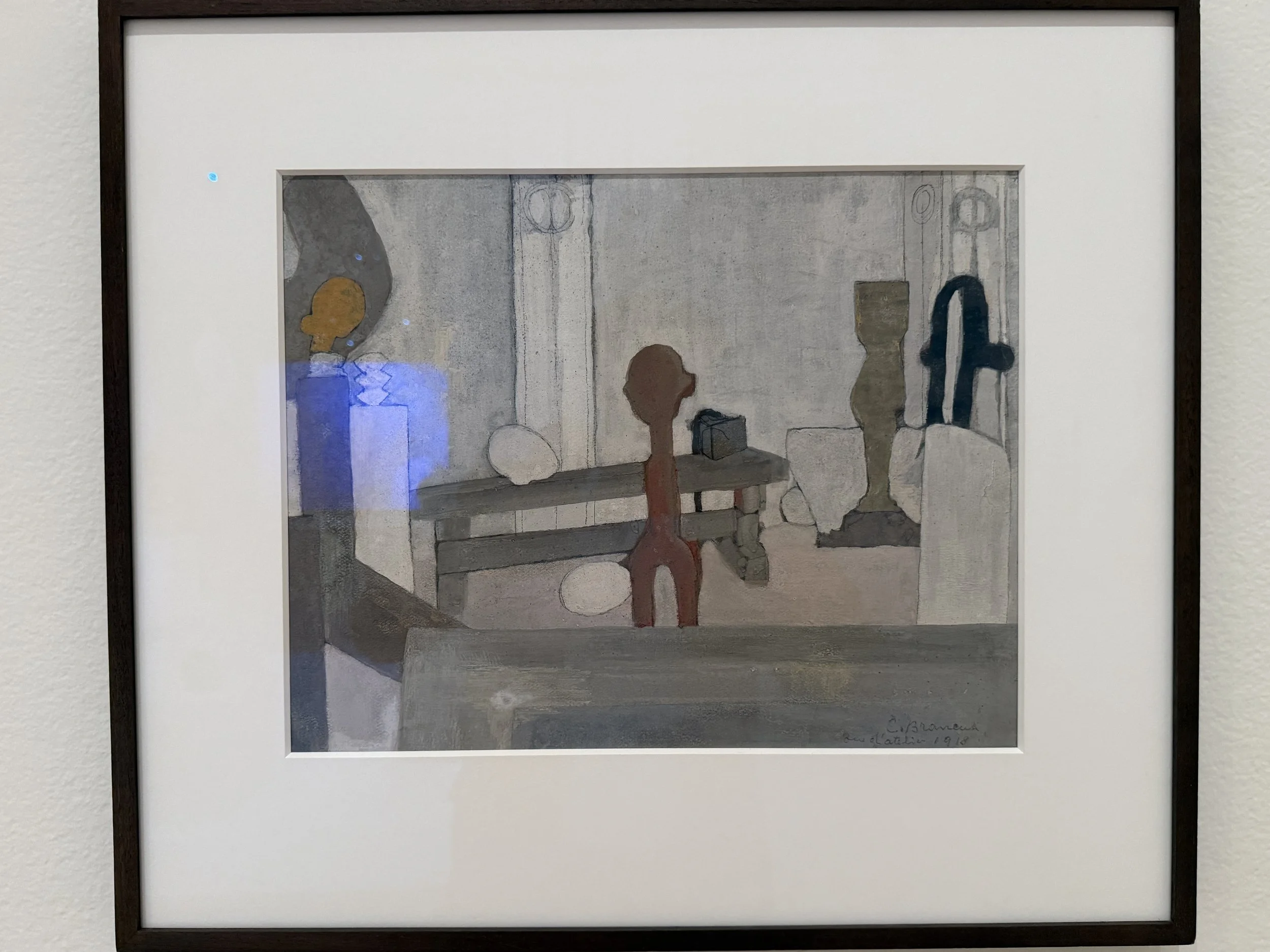
View of the Artist's Studio, 1918. Photo: J. Scott Orr
Though the masterpiece Danaïde has gone from the hands of one mega-collector to another, it is represented in a couple of ways in the exhibition. It makes an appearance in Brancusi's 1918 gouache View of the Artist's Studio as an ochre silhouette among the studio clutter. And the model for Danaïde was Margit Pogany, the same model he used for the bronzes Mlle Pogany and Mlle Pogany III and a plaster Mlle Pogany I that are part of the MoMA show.
In addition to the Mlle Pogany collection there are plenty of other Brancusi classics in the show, including three answers to Rodin’s The Kiss: Medallion (The Kiss), 1919, his only work in volcanic rock; The Kiss, 1923-1925, in brown limestone; and The Kiss, 1940, in yellow limestone. Brancusi’s best-known The Kiss, the 1907-1908 original, which is not in the show, may have been a declaration of independence of sorts from Rodin, who employed Brancusi in his studio for about a month in 1907. When he quit, Brancusi famously said "nothing grows in the shadow of great trees,"
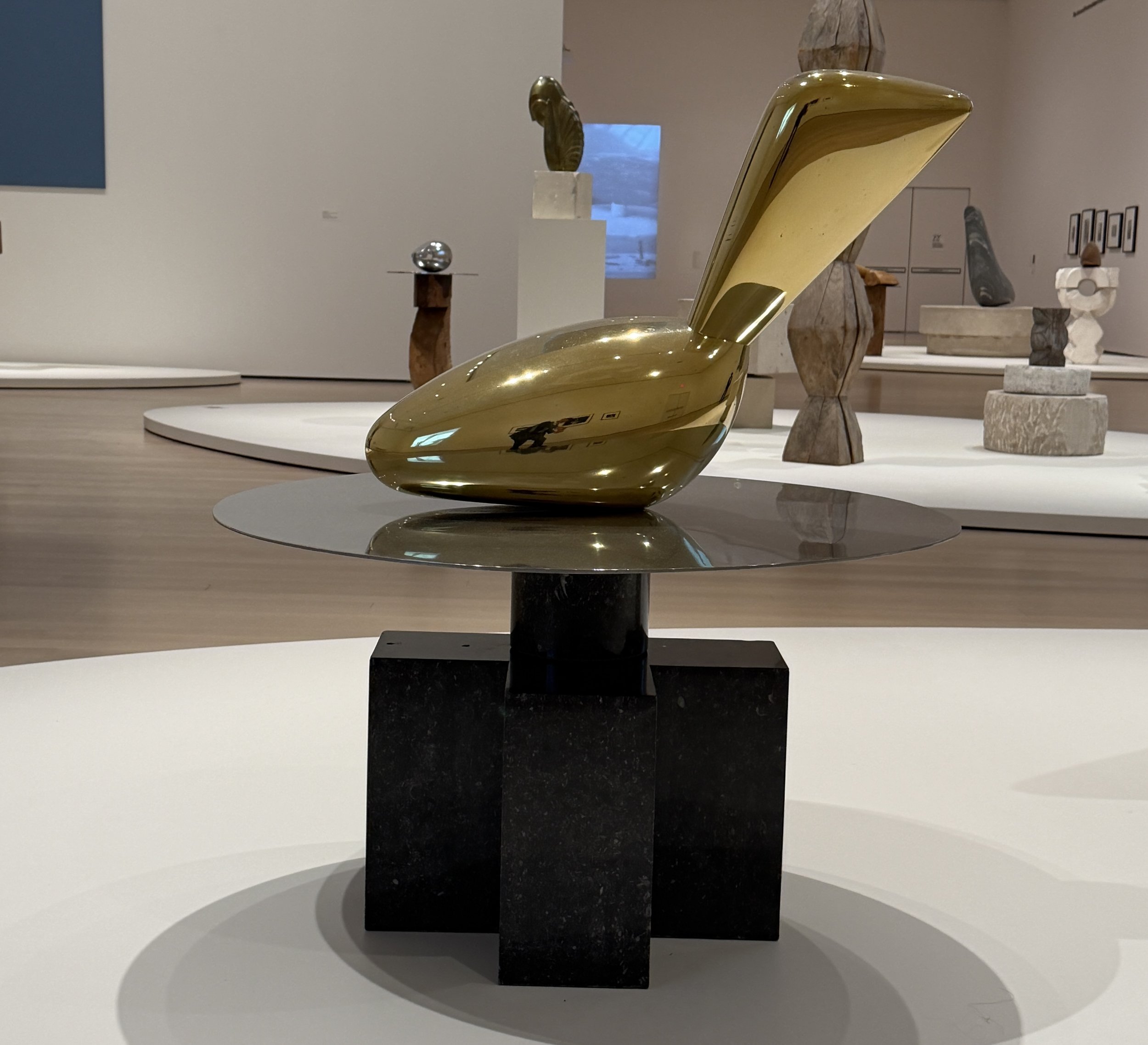
Leda, 1926, Polished bronze on nickel-silver disk, on two-part pedestal of black marble and black granite. Photo: J. Scott Orr
There’s Leda (1926), which condenses the Greek myth of Leda and the swan into a golden object that resembles neither a bird, nor a maiden, but somehow manages to capture the essence of both. And Bird in Space, three versions of which are included in the show, evokes at once a feather, a flame and somehow a space age that was still decades away when he made his first version of the piece. Like many of Brancusi’s works, Birds in Space provoked debate over what should qualify as art and what should not.
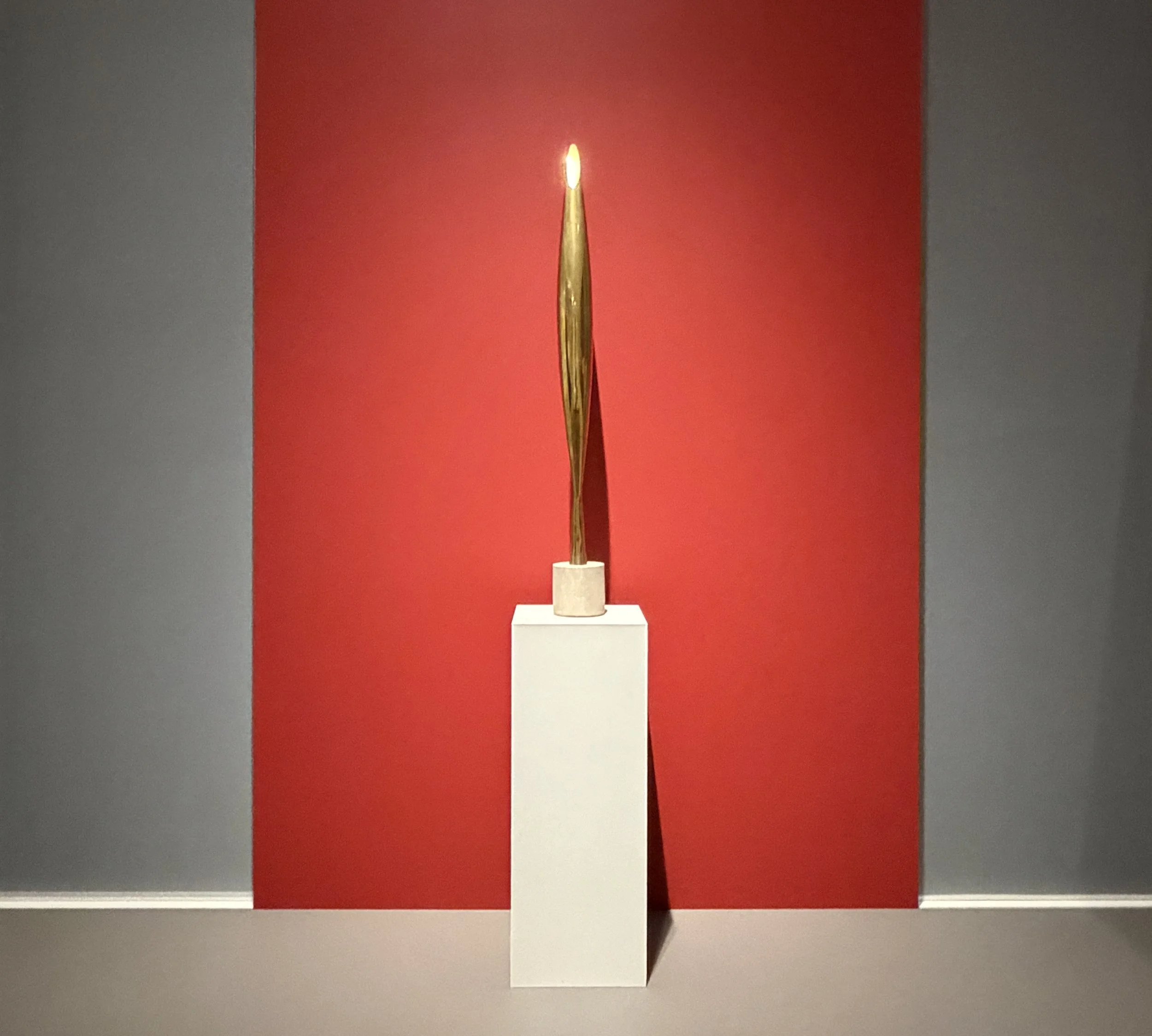
Bird in Space, 1928, Bronze. Photo: J. Scott Orr
“Rather infamously, in 1926, these Birds in Space were so ahead of their time that a U.S. customs agent declared one inadmissible on the grounds that it did not qualify as a work of art. Fast-forwarding 100 years later, today, of course, Brancusi's Birds in Space, his columns, and his gleaming fish are all widely recognized and celebrated as landmarks in contemporary art,” Umland said.
Along with sculpture, photograph, film and ephemera, the exhibition also includes some of Brancusi’s beloved tools: chisels, files, saws, calipers and other implements, some made himself, that were in his studio when he passed away in 1957. “When your work is done,” he once said, “you’ve got to give the tools a rest, so that the next day they’ll bid you continue. Otherwise they’ll impart their weariness to you or get angry.”
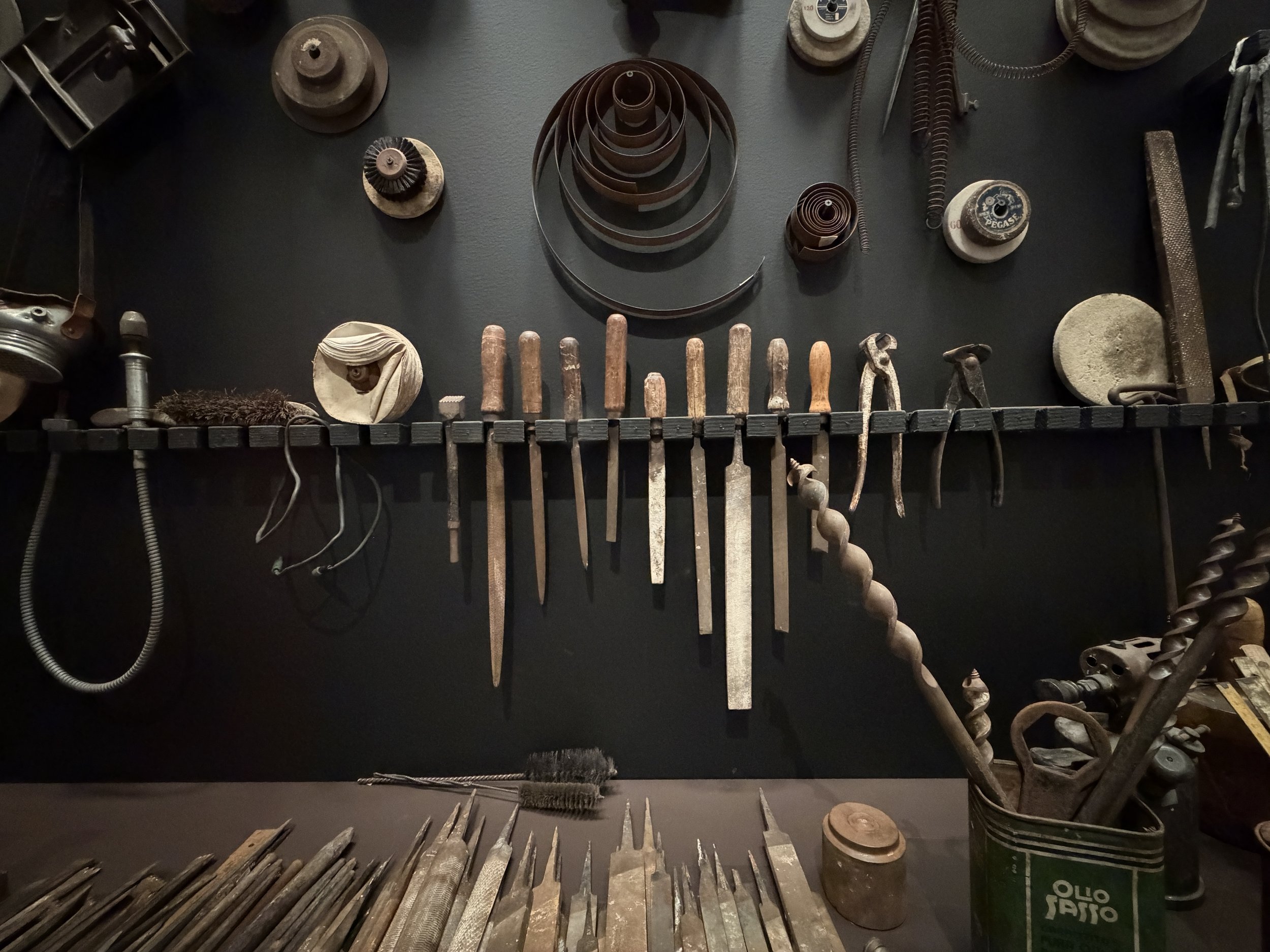
A collection of tools that were in Brancusi's Paris studio when he died in 1957. Photo: J. Scott Orr
While this is Brancusi’s first solo show at MoMA, the museum holds a worthy collection of his work that has been featured in group shows over the years. While Umland noted that MoMA “championed Brancusi from its very, very first years, when his work was still being questioned as to whether or not it was art,” it’s the Guggenheim that gave him New York solo shows in 1955, 1969-70 and 2004. Still, he was never far from the galleries and the collectors of New York.
But MoMA’s handling of the career-spanning exhibition makes a separate point about Brancusi: he was never really far from his studio, even when traveling around the world. When he came to New York in 1926 for solos at Wildenstein and Brummer galleries, his studio was still clearly on his mind.
"Why, [it's] my studio," Brancusi exclaimed after surveying the New York skyline, "all these blocks, all these shapes to be shifted and juggled with, as the experiment grows and changes."
Brancusi: The Artist and His Studio runs October 25 through February 27 at MoMA, 11 W. 53rd Street, New York City.